
In disturbed areas of the Agusan River Basin, a shift toward stress-tolerant macroinvertebrates signals early river degradation
16 Oct 2026
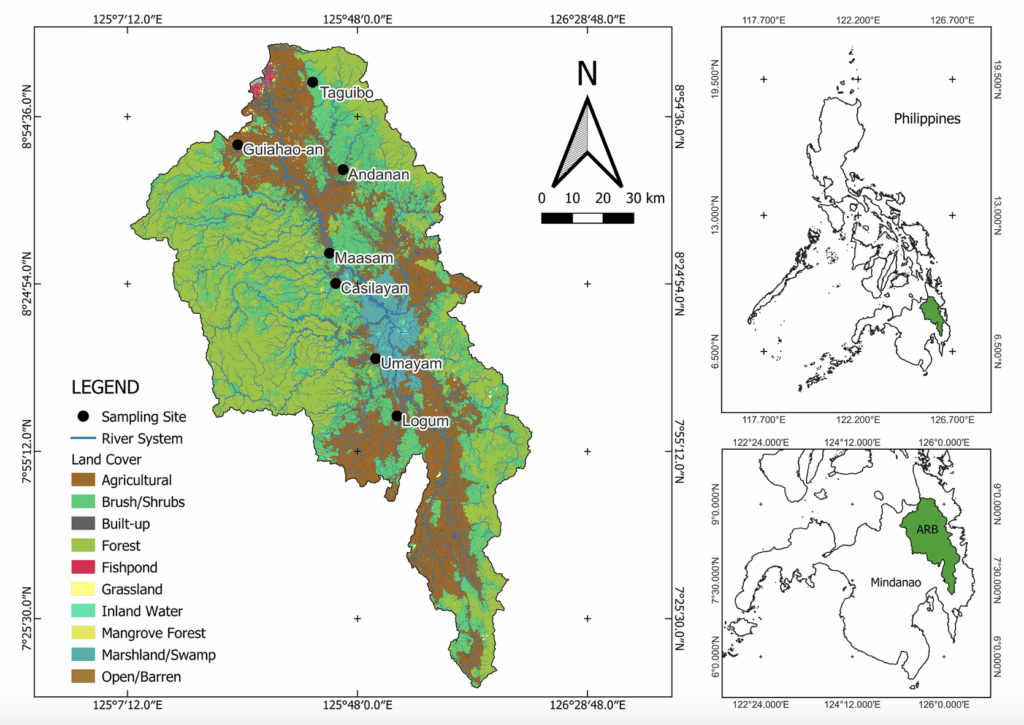
Tropical freshwater systems support diverse macroinvertebrate assemblages that contribute to sustaining the benefits that these ecosystems provide. Hence, maintaining their health is crucial for ecosystem functioning and biodiversity. The study focused on understanding how agricultural land use affects river ecosystems in the Agusan River Basin (ARB) in the Philippines. It examined the assemblages of macroinvertebrates—small animals living at the bottom of streams and rivers—which serve as important indicators of water quality and overall ecosystem health.
Results revealed significant differences in macroinvertebrates across the gradient of land use surrounding each river. Specifically, in more disturbed areas, there was a shift toward macroinvertebrates that are energy-conserving and stress-tolerant, like those with limited mobility, small sizes, and low reproduction potential. These changes suggest early signs of river degradation, potentially reducing their resilience and ability to recover from disturbances.
Despite most water quality parameters meeting national standards, the dominance of traits associated with stress-tolerance indicates subtle but important shifts in ecosystem functioning. This could lead to decreased biodiversity and altered ecosystem services if human impacts continue to be unchecked. The study highlights the importance of monitoring using both taxonomic and functional trait analyses to detect early signs of environmental stress. Protecting these rivers requires implementing better land management practices and conservation strategies to prevent further ecological decline and maintain the biodiversity and health of these vital freshwater systems.
The ARB exemplifies the ecological and conservation challenges faced by tropical river systems. It provides critical ecosystem services such as agriculture, logging, mining, water supply, food regulation, and habitat for numerous endangered and endemic species. However, recent observations suggest that the ARB marsh is at risk of losing hydrological and ecological functionality due to upstream deforestation, erosion, and mining, which are increasing sedimentation and pollutant loads. The ongoing anthropogenic pressure threatens to disrupt the macroinvertebrate assemblage structure and impair critical ecological functions, such as organic matter processing and nutrient cycling. If current trends persist, the ARB may experience a decline in functional diversity, leading to lower ecological resilience and altered trophic dynamics.
Our study presents insights on the taxonomic and functional response of macroinvertebrates along a gradient of disturbance within the ARB. By incorporating a functional trait-based approach, we assessed how macroinvertebrate assemblages respond to stressors, revealing early signs of ecological impairment that taxonomic metrics might overlook. This approach enables a more comprehensive evaluation of anthropogenic impacts on biodiversity and ecosystem processes. By linking biodiversity patterns with ecological function, our study provides essential baseline data and supports evidence-based conservation and management of the ARB in the context of intensifying land-use pressures.
Authors: Mariella Isabel D. Dimaano (Institute of Biology, University of the Philippines Diliman), Sedney S. Mendoza (Graduate School, University of the Philippines Los Baños | Institute of Biology, University of the Philippines Diliman), Christine Jewel C. Uy‑Yabut (Institute of Biology, University of the Philippines Diliman), and Francis S. Magbanua (Institute of Biology, University of the Philippines Diliman)
Read the full paper: https://doi.org/10.1007/s10452-025-10207-9