
Nature-based play offers a holistic approach to child development but faces barriers such as reduced green spaces in urban areas
10 Sep 2026
The rapid urbanization and domination of concrete landscapes in cities diminish children’s access to natural environments and traditional outdoor play. These sedentary and technology-driven activities raise concerns about the potential consequences for child development. This study aims to explore the lived experiences of teachers in a child development center (CDC) in implementing nature-based play (NBP) and how urbanization and decreasing green spaces in developing countries impact NBP. Using multiple case studies in the Philippines, the study interviewed teachers from a child development laboratory and applied narrative analysis. Results showed that the teachers perceived NBP as a form of play that happens in the natural environment, involves natural elements, is unstructured, and aids in learning. Moreover, NBP is accorded a crucial role in all domains of early childhood development, including physical activity, cognitive learning, as well as social and emotional development. However, weather disturbances, safety concerns, increasing teacher workloads, and the expansion of urban infrastructure reduce natural and green spaces and challenge NBP implementation. Findings provide recommendations for more inclusive development by incorporating green spaces in urban planning and design, as well as community participation in NBP for more holistic and resilient child development.
The interest in NBP and nature-based learning has been growing in child development institutions. Nature-based play involves unstructured activities in natural settings, such as parks, forests, and gardens, allowing children to engage with and explore the natural elements surrounding them. NBP offers a holistic approach to child development, encompassing physical, cognitive, emotional, social, and environmental aspects. Despite these advantages, several barriers prevent its integration into the school environment. These include curriculum demands, lack of time, limited teacher expertise and confidence, lack of parental or leadership support, limited resources, safety concerns, and limited access to suitable outdoor spaces. This study aims to explore the lived experiences of teachers in CDCs implementing NBP and how urbanization and decreasing green spaces in developing countries impact NBP. The findings of this study provide recommendations on the promotion of NBP as well as the protection and preservation of natural areas and green spaces in urban areas.
Authors: Hannah Raven S. Gutierrez (Department of Human and Family Development Studies, College of Human Ecology, University of the Philippines Los Baños), Juliana Selina A. Agoncillo (Department of Human and Family Development Studies, College of Human Ecology, University of the Philippines Los Baños), Trisha Mae U. Catapang (Department of Human and Family Development Studies, College of Human Ecology, University of the Philippines Los Baños), and Casper Boongaling Agaton (Department of Community and Environmental Resource Planning, College of Human Ecology, University of the Philippines Los Baños)
Read the full paper: https://doi.org/10.1007/s42322-025-00204-9
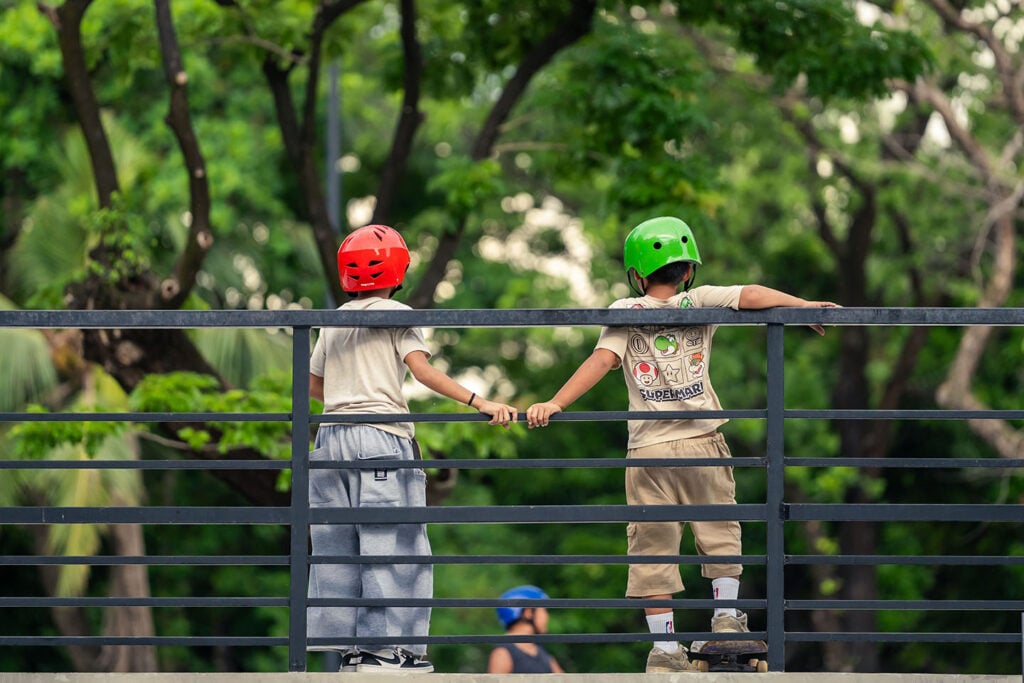
Image by Aniel Ventura from Pexels