
The risk of measles is higher on warmer days

04 Dec 2025
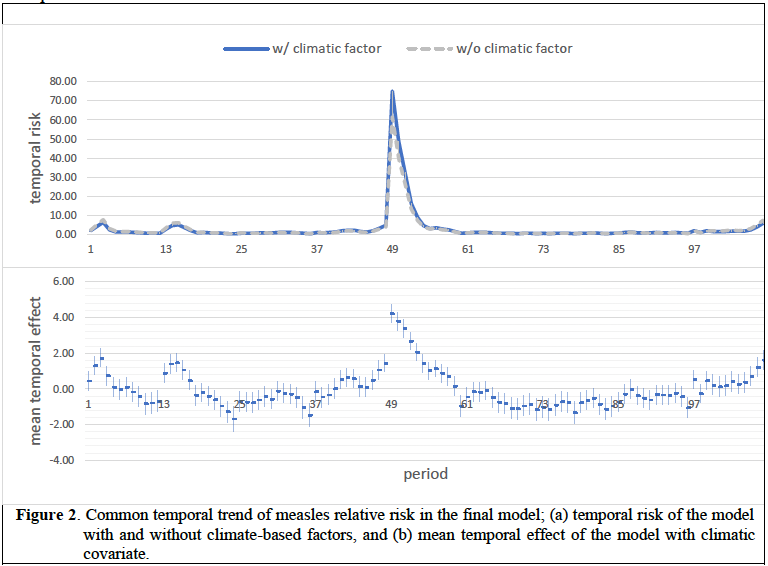
This study looks at how measles spreads in certain areas of the Philippines, specifically Central Luzon, CALABARZON, and MIMAROPA, using advanced statistical methods. The researchers wanted to understand the patterns of measles outbreaks by analyzing data over time and across different locations. They found that the risk of measles was higher on warmer days. This discovery could RESEARCH | This study looks at how measles spreads in certain areas of the Philippines, specifically Central Luzon, CALABARZON, and MIMAROPA, using advanced statistical methods. The researchers found that the risk of measles was higher on warmer days. Bataan, Tarlac and Zambales were among the areas that were consistently at higher risk of measles. The study could help health officials prepare for and prevent future outbreaks by targeting the areas and times of highest risk. It could also help address the ongoing challenge of measles outbreaks in the Philippines, where low vaccination coverage, vaccine hesitancy, and environmental factors drive the spread of the disease.

The study identified several areas, such as Bataan, Tarlac, and Zambales, that were consistently at higher risk of measles. These areas should be the focus of public health efforts, including raising awareness, improving vaccination programs, and strengthening healthcare services during high-risk periods. However, the study also found that their model tended to underestimate the actual risk, which might be due to missing important factors like people’s attitudes toward vaccines or other social behaviors. The researchers suggest that refining the model by considering these factors and analyzing smaller regions could provide even more accurate predictions. Despite its limitations, the study shows that using these methods could help predict and prevent future measles outbreaks more effectively.

This study is essential in tackling the persistent issue of measles outbreaks in the Philippines, where low vaccination coverage, vaccine hesitancy, and environmental factors contribute to the spread of the disease. By incorporating climate-related variables such as temperature, humidity, and rainfall into spatio-temporal models, the research aims to uncover the environmental influences on measles transmission, an area that has been underexplored in previous studies. This approach will enhance the accuracy of measles risk assessments and help predict outbreaks more effectively.

Furthermore, the study’s integration of spatial and temporal data will allow for more targeted interventions, ensuring that vaccination campaigns and resources are directed to the areas most at risk. By identifying high-risk regions based on environmental and demographic factors, public health officials can prioritize efforts, reducing the overall public health burden.

The findings from this study have broader implications for public health policy, as they could guide future vaccination strategies, outbreak forecasting, and preparedness plans. The research also contributes to the global fight against measles, providing methodologies that could be adapted for use in other regions with similar challenges. Ultimately, this study supports the development of more effective disease prevention measures, helping to reduce measles transmission, protect vulnerable populations, and contribute to the global goal of measles elimination.

Authors: Edrun R. Gayosa (Institute of Statistics, College of Arts and Sciences, University of the Philippines Los Baños) and Consorcia E. Reaño (Institute of Crop Science, College of Agriculture and Food Science, University of the Philippines Los Baños)

Read the full paper: https://philjournalsci.dost.gov.ph/spatio-temporal-modelling-of-measles-risk-in-the-provinces-of-central-luzon-calabarzon-and-mimaropa-linking-the-impact-of-climate-based-factors/

The risk of measles is higher on warmer days

This study looks at how measles spreads in certain areas of the Philippines, specifically Central Luzon, CALABARZON, and MIMAROPA, using advanced statistical methods. The researchers wanted to understand the patterns of measles outbreaks by analyzing data over time and across different locations. They found that the risk of measles was higher on warmer days. This discovery could RESEARCH | This study looks at how measles spreads in certain areas of the Philippines, specifically Central Luzon, CALABARZON, and MIMAROPA, using advanced statistical methods. The researchers found that the risk of measles was higher on warmer days. Bataan, Tarlac and Zambales were among the areas that were consistently at higher risk of measles. The study could help health officials prepare for and prevent future outbreaks by targeting the areas and times of highest risk. It could also help address the ongoing challenge of measles outbreaks in the Philippines, where low vaccination coverage, vaccine hesitancy, and environmental factors drive the spread of the disease.

The study identified several areas, such as Bataan, Tarlac, and Zambales, that were consistently at higher risk of measles. These areas should be the focus of public health efforts, including raising awareness, improving vaccination programs, and strengthening healthcare services during high-risk periods. However, the study also found that their model tended to underestimate the actual risk, which might be due to missing important factors like people’s attitudes toward vaccines or other social behaviors. The researchers suggest that refining the model by considering these factors and analyzing smaller regions could provide even more accurate predictions. Despite its limitations, the study shows that using these methods could help predict and prevent future measles outbreaks more effectively.

This study is essential in tackling the persistent issue of measles outbreaks in the Philippines, where low vaccination coverage, vaccine hesitancy, and environmental factors contribute to the spread of the disease. By incorporating climate-related variables such as temperature, humidity, and rainfall into spatio-temporal models, the research aims to uncover the environmental influences on measles transmission, an area that has been underexplored in previous studies. This approach will enhance the accuracy of measles risk assessments and help predict outbreaks more effectively.

Furthermore, the study’s integration of spatial and temporal data will allow for more targeted interventions, ensuring that vaccination campaigns and resources are directed to the areas most at risk. By identifying high-risk regions based on environmental and demographic factors, public health officials can prioritize efforts, reducing the overall public health burden.

The findings from this study have broader implications for public health policy, as they could guide future vaccination strategies, outbreak forecasting, and preparedness plans. The research also contributes to the global fight against measles, providing methodologies that could be adapted for use in other regions with similar challenges. Ultimately, this study supports the development of more effective disease prevention measures, helping to reduce measles transmission, protect vulnerable populations, and contribute to the global goal of measles elimination.

Authors: Edrun R. Gayosa (Institute of Statistics, College of Arts and Sciences, University of the Philippines Los Baños) and Consorcia E. Reaño (Institute of Crop Science, College of Agriculture and Food Science, University of the Philippines Los Baños)

Read the full paper: https://philjournalsci.dost.gov.ph/spatio-temporal-modelling-of-measles-risk-in-the-provinces-of-central-luzon-calabarzon-and-mimaropa-linking-the-impact-of-climate-based-factors/