
In a small island community, government shortcomings in post-disaster housing reconstruction and flood adaptation projects have resulted in continued vulnerability
18 Dec 2025
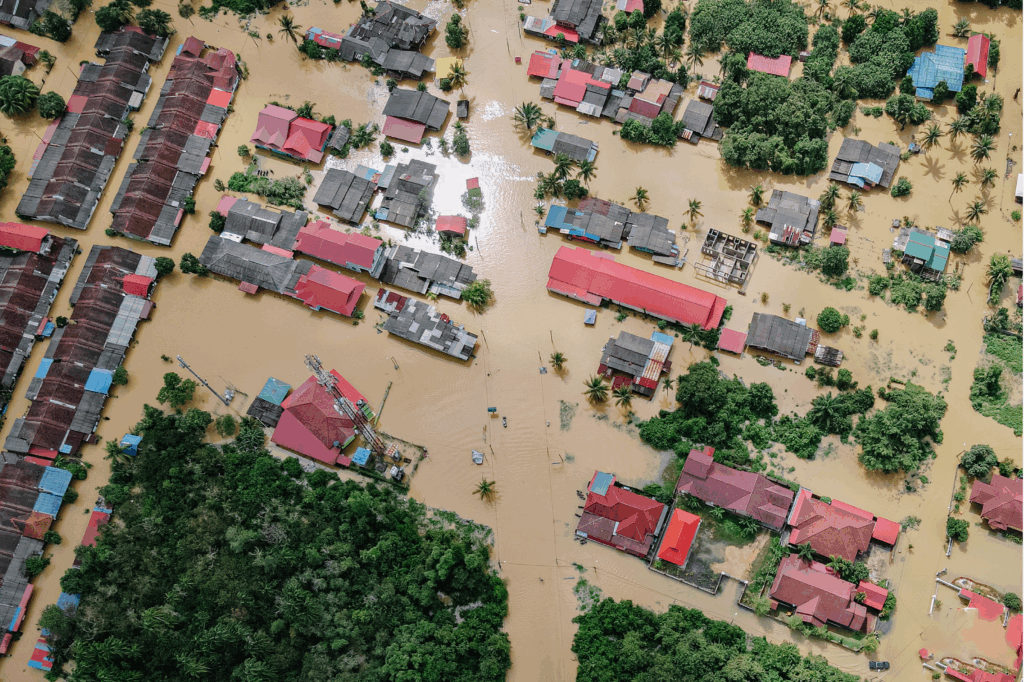
The article examines the material realities of housing reconstruction in Isla Sasa, an island community located in an estuary of Manila Bay, which is currently experiencing the severe effects of climate change, exacerbated by piecemeal and misguided government interventions.
Using the framework of disaster injustice, this interdisciplinary study considers insights from various stakeholders, including local government officials, community leaders, and, most importantly, community members, to understand the disjunction between the community’s needs and the assistance provided by the government. Disaster injustice is operationalized by Shrestha et al. (2019) as accountability failure, representation failure, and knowledge disaster. This research uses methodological tools from anthropology and architecture, such as ethnographic fieldwork supplemented by countermapping and architectural analysis of built structures on the island.
The findings suggest that there is an accountability failure on the part of the government, as its disaster mitigation and management strategies do not take into account how social capital and differential access to material resources and government assistance actually intensify the effects of disasters in the community. Disaster injustice on the island mainly occurs because of the unequal distribution of housing reconstruction resources. Many residents have limited access to assistance, and the support provided often does not match the islanders’ actual reconstruction needs. Accountability gaps are also evident in flood adaptation infrastructure projects, which have increased the vulnerability of fisherfolk instead of reducing it. These problems persist even though national laws require the provision of resilient housing for vulnerable groups, including mandated support for fisherfolk resettlement. As such, any kind of government intervention should be grounded in the material, economic, and social realities of the different members of the community.
The findings also highlight the structural nature of injustice. Injustice is embedded in social roles, rules, and power relations that restrict access to durable housing materials and resilient structures. It is further reinforced by spatial inequalities linked to small-island living, institutional and individual actions shaped by unequal power, and unintended effects of social and physical systems that worsen exposure to flooding.
Authors: Pamela Gloria Cajilig (College of Architecture, University of the Philippines Diliman), Monica F. A. W. Santos (Department of Anthropology, College of Social Sciences and Philosophy, University of the Philippines Diliman), Simon Cervantes (Mapua Malayan Colleges Laguna) and Olivia Alma G. Sicam (College of Architecture, University of the Philippines Diliman)
Read the full paper: https://muse.jhu.edu/article/913827