
Tagalog-learning infants discriminate “na” and “nga” at 10–12 months but not at 4–6 months
29 Jul 2026
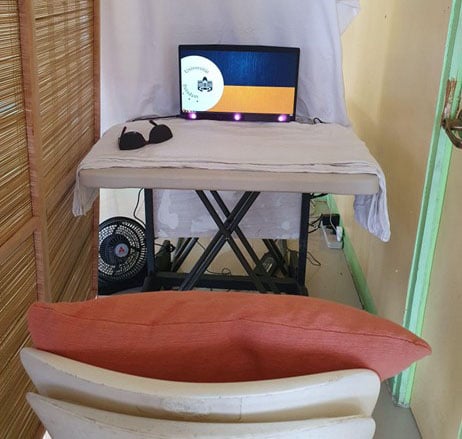
Although infants are traditionally understood to possess universal discrimination abilities, this framework relies predominantly on studies of Indo-European languages. To address this bias, we conducted three preregistered field experiments testing nasal discrimination abilities in Tagalog-learning infants in the Philippines. Experiments 1 and 2 evaluated 4- to 6-month-olds and 10- to 12-month-olds, respectively, on their ability to distinguish “na” from “nga.” Experiment 3 assessed 4- to 6-month-olds’ discrimination of “an” vs. “ang.”
We found through the use of a mobile lab set-up at a barangay that only 10- to 12-month-old Tagalog- learning infants can hear the subtle difference between “na” and “nga”, and not the younger 4- to 6-month-old age group. This finding does not support previous proposals that infants are born with the ability to recognize the difference between sounds in any language of the world. Our findings indicate that infants might need to receive more language input before they can differentiate between sounds that are acoustically very similar. In the paper, we also discuss other potential reasons for the late discrimination that we found, including the influence of socio-economic status, bilingualism, and our fieldwork set-up. Despite the limitations of a fieldwork set-up, we argue that if we are serious in increasing the diversity of our science to non-Indo-European languages and to participants in the Global South, we should embrace these limitations for now and work on adapting our methods.
Our research work provides novel insights into Tagalog-learning infants’ phonological development, which is crucial for eventual identification of speech and language delays. Moreover, our findings do not support previous theoretical claims that have mostly been based on studies on Indo-European languages and children in North America. The current results show that previous findings might not generalize to other contexts, which underlines the need to diversify our evidential base in order to fully understand how children learn language, anywhere in the world, and not just in selected overrepresented areas. To our knowledge, this is the first psycholinguistic experiment done on infants in the Philippines. With the article’s open access publication, we hope that it reaches many researchers, particularly those in the Philippines; also, with the hope that they can build on this work.
Authors: Rowena Garcia (Language Development and Multilingualism Research Area, Leibniz-Centre General Linguistics | Department of Linguistics, University of Potsdam | Department of Speech Pathology, University of the Philippines Manila), Michael C. Valdez (Department of Speech Pathology, University of the Philippines Manila), and Natalie Boll-Avetisyan (Department of Linguistics, University of Potsdam)
Read the full paper: https://doi.org/10.1037/dev0002053