
Study compares the genetic profile of GL01, a novel Filipino non-small cell lung cancer cell line, with the commonly used A549 cell line
05 Aug 2026
Lung cancer remains one of the most prevalent and fatal malignancies globally, accounting for over 1.7 million deaths in 2020. Among its various histological subtypes, non-small cell lung cancer (NSCLC) predominates, representing approximately 85% of all diagnosed cases.
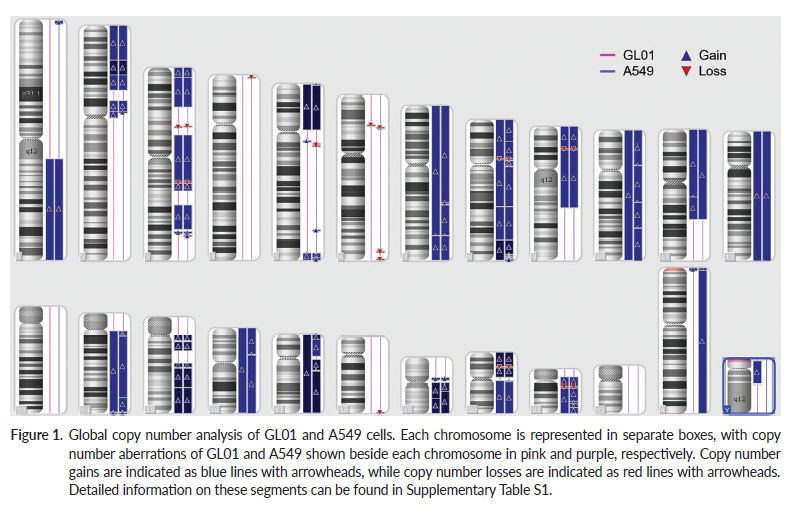
Cell lines help researchers study lung cancer, but most available cell lines are of Caucasian origin, which may not be representative of all genetic variations. To address the need for Filipino-derived lung cancer cell lines, we previously developed a new cell line, GL01, from a Filipino patient with NSCLC. This study compared GL01 with another commonly used lung cancer cell line, A549, in terms of genome-wide copy number variations to understand how they differ or align genetically.
To further our understanding on these cells as a potential Filipino patient-derived NSCLC cell line, it is important to characterize them. One way by which this can be done is through copy number variation profiling. We analyzed both cell lines using the OncoScan CNV Plus Assay to spot any differences or similarities in the copy number of DNA regions that commonly change in lung cancer. We also used the PANTHER Classification System to examine which pathways were affected by the copy number changes. Results showed that GL01 and A549 shared many copy number alterations related to lung cancer.
One pathway, the ubiquitin proteasome pathway—which helps manage proteins in cells—was predicted to be significantly affected by copy number changes in both cell lines. This pathway’s activity might hold clues for better understanding, diagnosing, and treating this type of cancer. Ultimately, these insights from the study of copy number variations in GL01 could lead to more relevant research and tailored treatments for diverse populations.
Authors: Treena Rica D. Teh (Department of Biochemistry and Molecular Biology, College of Medicine, University of the Philippines Manila), Kim Claudette J. Fernandez (Department of Biochemistry and Molecular Biology, College of Medicine, University of the Philippines Manila), Maria Katrina Diana M. Cruz (Department of Biochemistry and Molecular Biology, College of Medicine, University of the Philippines Manila), Patrick Gabriel G. Moreno (Department of Biochemistry and Molecular Biology, College of Medicine, University of the Philippines Manila), Ruel C. Nacario (Institute of Chemistry, University of the Philippines Los Baños), Gladys C. Completo (Institute of Chemistry, University of the Philippines Los Baños), and Francisco M. Heralde, III (Department of Biochemistry and Molecular Biology, College of Medicine, University of the Philippines Manila | Molecular Diagnostics and Cellular Therapeutics Laboratory, Department of Pathology, Lung Center of the Philippines)
Read the full paper: https://actamedicaphilippina.upm.edu.ph/index.php/acta/article/view/10777/6783