
Using Nutrio®, a biofertilizer, improves rice yield and profitability while promoting sustainable agricultural practices
14 Sep 2026
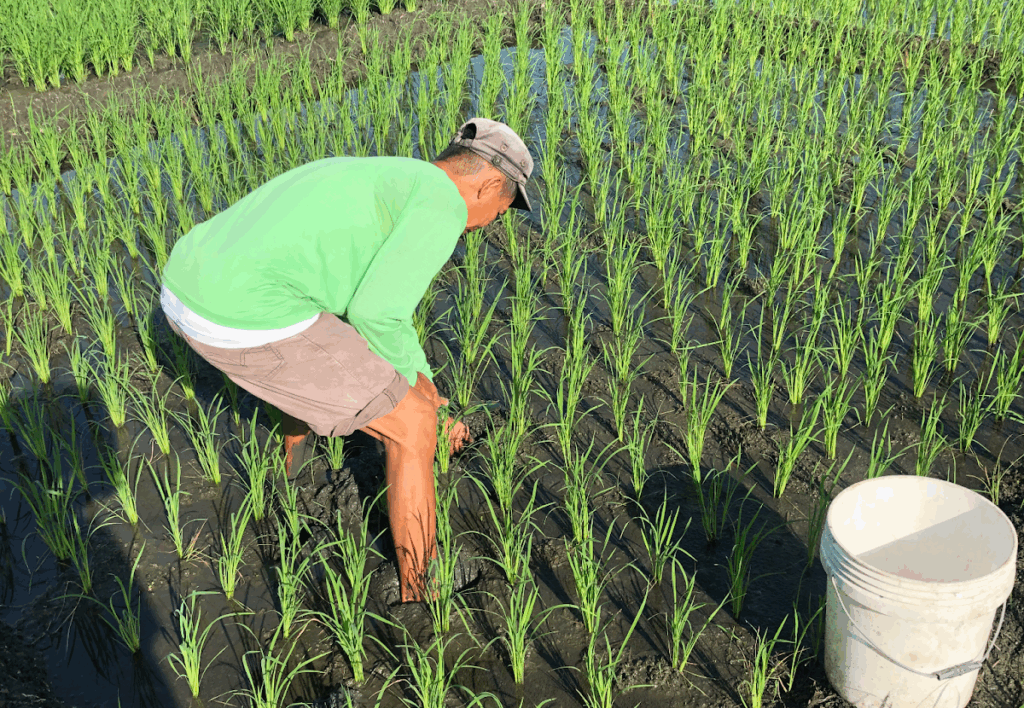
Recent rice farming innovations in the Philippines are finding ways to grow more while protecting the environment. One example is Nutrio®, a biofertilizer developed by UPLB-BIOTECH that contains beneficial microorganisms to enhance plant nutrition and growth.
Originally tested on sugarcane, this study tried Nutrio® for potential rice application. Researchers tested the biofertilizer in Victoria, Laguna, during the 2019 wet season and 2020 dry season, using six different treatments. They measured plant height, number of panicles, biomass, grain yield, and harvest index. They also calculated profitability through cost-benefit ratio (CBR) and net present value (NPV).
Results showed that rice plants treated with Nutrio® performed relatively better than untreated plants in most growth measures and profitability. The most profitable approach was using Nutrio® together with half the farmer’s usual amount of chemical fertilizer. This combination means farmers can spend less on costly chemical fertilizers, which are often imported and harmful to farmers’ and soil health, while still producing high yields. It also reduces environmental damage linked to the overuse of synthetic fertilizers.
The significance of this research is in its contribution to sustainable and affordable rice farming methods in the Philippines. Given the country’s significant reliance on imported chemical fertilizers and the increasing environmental and economic issues related to agrochemical application, this study analyzes the potential of Nutrio®, a microbial-based foliar biofertilizer, as an alternative. The study shows that integrating Nutrio® with lower levels of traditional fertilizer (specifically, half of the farmer’s recommended rate) can sustain or enhance rice yield, while reducing input costs and minimizing environmental impact.
The study shows that this method produces comparable ergonomic results, including grain yield, biomass, plant height, and tiller/panicle count, to traditional techniques while also offering the highest net income and net present values relative to all other treatments. These results promote the development of more sustainable, economically viable agricultural methods that can be expanded and replicated in other rice-producing areas, thereby improving food security, farmer earnings, and environmental protection in the Philippines.
Authors: Emil John C. Cabrera (Department of Agribusiness Management and Entrepreneurship, College of Economics and Management, University of the Philippines Los Baños), Cathrene P. Amante (Technology Transfer and Business Development Office, University of the Philippines Los Baños, Los Baños), and Virginia M. Padilla (National Institute of Molecular Biology and Biotechnology, University of the Philippines Los Baños)
Read the full paper: https://pas.uplb.edu.ph/journal-issues/analysis-of-nutrio-biofertilizer-application-on-the-physical-properties-of-rice-oryza-sativa-l-and-financial-performance-in-rice-farming/