
Adding Philippine natural zeolite to concrete increases its strength and radiation-shielding ability

29 Sep 2026
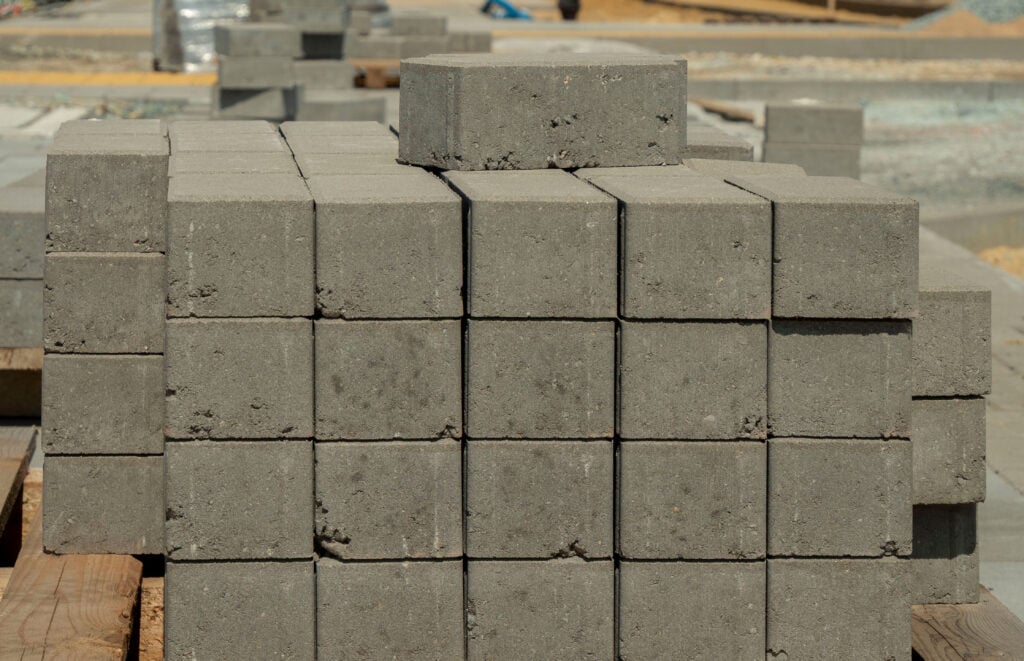
This study explores how adding a natural material called Philippine natural zeolite (PNZ) to concrete can improve its strength and ability to block harmful radiation like X-rays and gamma rays. Zeolite is a mineral that reacts with chemicals in cement to strengthen concrete. Researchers tested concrete mixes where 20% and 40% of the cement was replaced with PNZ. Surprisingly, the mix with 40% PNZ became much stronger—up to four times stronger than regular concrete. It improved the concrete’s compressive and split tensile strengths by 400% and 558%, respectively, due to the pozzolanic reaction between zeolite and calcium hydroxide, which improves structural performance.

Meanwhile, the 20% PNZ mix performed best at blocking radiation, achieving the highest linear and mass attenuation coefficients across a range of X-ray and gamma-ray energies. It offers an optimal balance between mechanical strength and radiation-shielding capacity, making it ideal for hospitals, labs, and nuclear facilities where radiation protection matters.

Using PNZ also helps reduce the amount of cement needed, which is good for the environment since cement production creates a lot of carbon emissions; reducing its use by partially substituting PNZ supports more environmentally friendly construction practices.

Because PNZ is locally available in the Philippines, this study also promotes using native resources instead of expensive imported or synthetic shielding materials.

Overall, this research shows that PNZ-mixed concrete is not only stronger and safer but also more sustainable. It can help build safer structures while protecting both people and the planet. By providing both experimental and simulation data, the study lays a solid foundation for future research on PNZ-based concretes, including investigations into durability, other replacement levels, and performance under higher-energy radiation. Overall, the findings contribute to the development of eco-efficient, high-performance concrete suitable for specialized construction applications.

Authors: Maria Cecilia SB. Rosero (Department of Physical Sciences and Mathematics, University of the Philippines Manila), Marianna Lourdes Marie L. Grande (Department of Science and Technology – Philippine Nuclear Research Institute), Eric M. Inocencio (Department of Physical Sciences and Mathematics, University of the Philippines Manila | Medical Imaging Department, Las Piñas General Hospital and Satellite Trauma Center, Philippines), and Mon Bryan Z. Gili (Department of Science and Technology – Philippine Nuclear Research Institute | Materials Science and Engineering Program, College of Science, University of the Philippines Diliman)

Read the full paper: https://doi.org/10.1016/j.radphyschem.2025.112970

Adding Philippine natural zeolite to concrete increases its strength and radiation-shielding ability

This study explores how adding a natural material called Philippine natural zeolite (PNZ) to concrete can improve its strength and ability to block harmful radiation like X-rays and gamma rays. Zeolite is a mineral that reacts with chemicals in cement to strengthen concrete. Researchers tested concrete mixes where 20% and 40% of the cement was replaced with PNZ. Surprisingly, the mix with 40% PNZ became much stronger—up to four times stronger than regular concrete. It improved the concrete’s compressive and split tensile strengths by 400% and 558%, respectively, due to the pozzolanic reaction between zeolite and calcium hydroxide, which improves structural performance.

Meanwhile, the 20% PNZ mix performed best at blocking radiation, achieving the highest linear and mass attenuation coefficients across a range of X-ray and gamma-ray energies. It offers an optimal balance between mechanical strength and radiation-shielding capacity, making it ideal for hospitals, labs, and nuclear facilities where radiation protection matters.

Using PNZ also helps reduce the amount of cement needed, which is good for the environment since cement production creates a lot of carbon emissions; reducing its use by partially substituting PNZ supports more environmentally friendly construction practices.

Because PNZ is locally available in the Philippines, this study also promotes using native resources instead of expensive imported or synthetic shielding materials.

Overall, this research shows that PNZ-mixed concrete is not only stronger and safer but also more sustainable. It can help build safer structures while protecting both people and the planet. By providing both experimental and simulation data, the study lays a solid foundation for future research on PNZ-based concretes, including investigations into durability, other replacement levels, and performance under higher-energy radiation. Overall, the findings contribute to the development of eco-efficient, high-performance concrete suitable for specialized construction applications.

Authors: Maria Cecilia SB. Rosero (Department of Physical Sciences and Mathematics, University of the Philippines Manila), Marianna Lourdes Marie L. Grande (Department of Science and Technology – Philippine Nuclear Research Institute), Eric M. Inocencio (Department of Physical Sciences and Mathematics, University of the Philippines Manila | Medical Imaging Department, Las Piñas General Hospital and Satellite Trauma Center, Philippines), and Mon Bryan Z. Gili (Department of Science and Technology – Philippine Nuclear Research Institute | Materials Science and Engineering Program, College of Science, University of the Philippines Diliman)

Read the full paper: https://doi.org/10.1016/j.radphyschem.2025.112970