
Pomegranate peel extracts show strong potential in mitigating oxidative stress caused by pollution and climate-induced stressors
14 Oct 2026
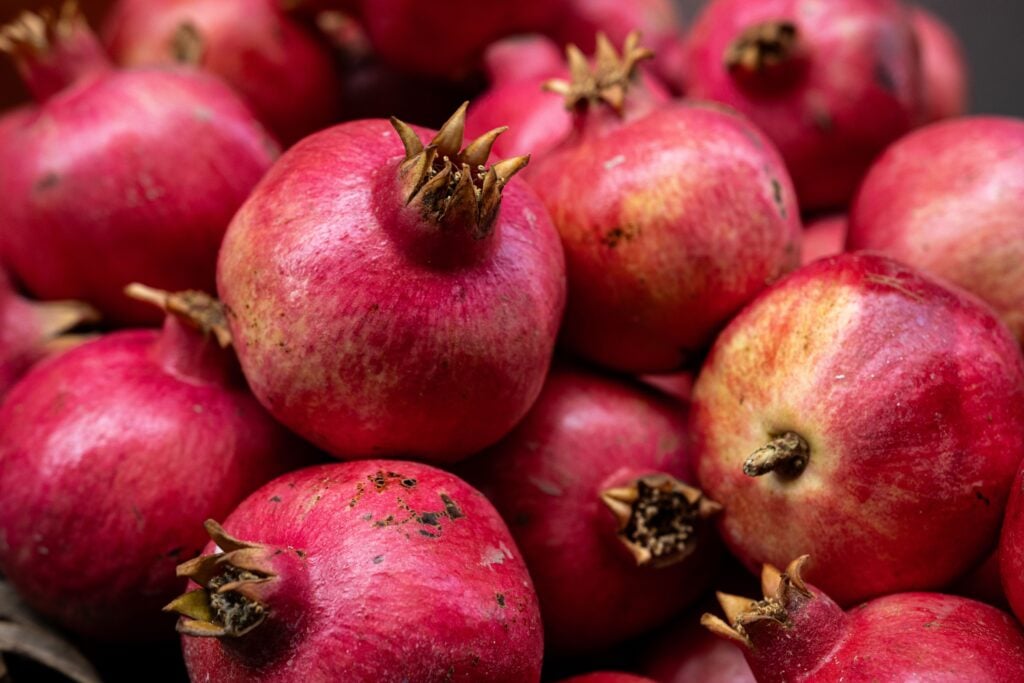
The increasing prevalence of Vibrio vulnificus, a potentially lethal pathogen, poses a severe threat to aquatic ecosystems and public health, exacerbated by the ongoing effects of climate change. This abstract explores a pioneering strategy that combines microbial fuel cell technology and molecular docking techniques to combat V. vulnificus pollution and harness the multifaceted potential of Punica granatum L. (pomegranate) peels. Water and ethanol extracts of P. granatum L. peels have been investigated for their antioxidant, bioenergy generation, and anti-V. vulnificus activities. The major compound identified in these extracts is ellagic acid, known for its electron shuttle capabilities and anti-V. vulnificus properties. These extracts displayed remarkable antioxidant activity, suggesting their potential to mitigate oxidative stress caused by environmental pollution and climate change-induced factors. Moreover, microbial fuel cells (MFCs) were employed as a sustainable technology to generate bioenergy. The utilization of P. granatum L. peel extracts as electron shuttles within the MFCs demonstrated promising results in enhancing energy-generation efficiency. Furthermore, molecular docking studies revealed the strong binding affinity of ellagic acid with the V. vulnificus target, offering insights into the mechanisms behind its antibacterial properties. The findings may offer a new rationale for P. granatum L. peels as a natural antimicrobial agent against V. vulnificus.
This study explores the potential of Punica granatum L. peel extracts as a natural source of bioactive compounds with antioxidant and antimicrobial properties. By integrating phytochemical profiling, bioelectrochemical evaluation, and in silico molecular docking, this research offers a novel approach to screen plant-based therapeutics. The findings are expected to contribute to the development of environmentally sustainable and cost-effective antimicrobial agents, particularly against V. vulnificus. Furthermore, this study supports the growing interest in natural product-based interventions aligned with climate-resilient health strategies.
Authors: Cheng‐Yang Hsieh (Department of Food Science, National Taiwan Ocean University | Department of Chemical and Materials Engineering, National I-Lan University), Bor‐Yann Chen (Department of Chemical and Materials Engineering, National I-Lan University), Paolo Robert P. Bueno (Department of Pharmaceutical Chemistry, College of Pharmacy, University of the Philippines Manila | Department of Chemistry, College of Science, Adamson University | Department of Biochemistry, Faculty of Pharmacy, University of Santo Tomas), Maria Regina Gean G. Aledia (School of Chemical, Biological, and Materials Engineering and Sciences, Mapúa University | School of Graduate Studies, Mapúa University), Kathlia A. De Castro‐Cruz (School of Chemical, Biological, and Materials Engineering and Sciences, Mapúa University), Ching‐Chiung Wang (Ph.D. Program in Clinical Drug Development of Herbal Medicine, College of Pharmacy, Taipei Medical University | School of Pharmacy, College of Pharmacy, Taipei Medical University | Traditional Herbal Medicine Research Center, Taipei Medical University Hospital | College of Pharmacy, Graduate Institute of Pharmacognosy, Taipei Medical University), Chia‐Jung Lee (Ph.D. Program in Clinical Drug Development of Herbal Medicine, College of Pharmacy, Taipei Medical University | College of Pharmacy, Graduate Institute of Pharmacognosy, Taipei Medical University), Chung‐Chuan Hsueh (Department of Chemical and Materials Engineering, National I-Lan University), and Po‐Wei Tsai (Department of Food Science, National Taiwan Ocean University)
Read the full paper: https://link.springer.com/article/10.1007/s12649-024-02822-8
Image by Oleksandra Zelena from Pexels