
Believing others expect perfection increases Filipino students’ vulnerability to poor well-being and unhealthy coping
01 Jul 2026
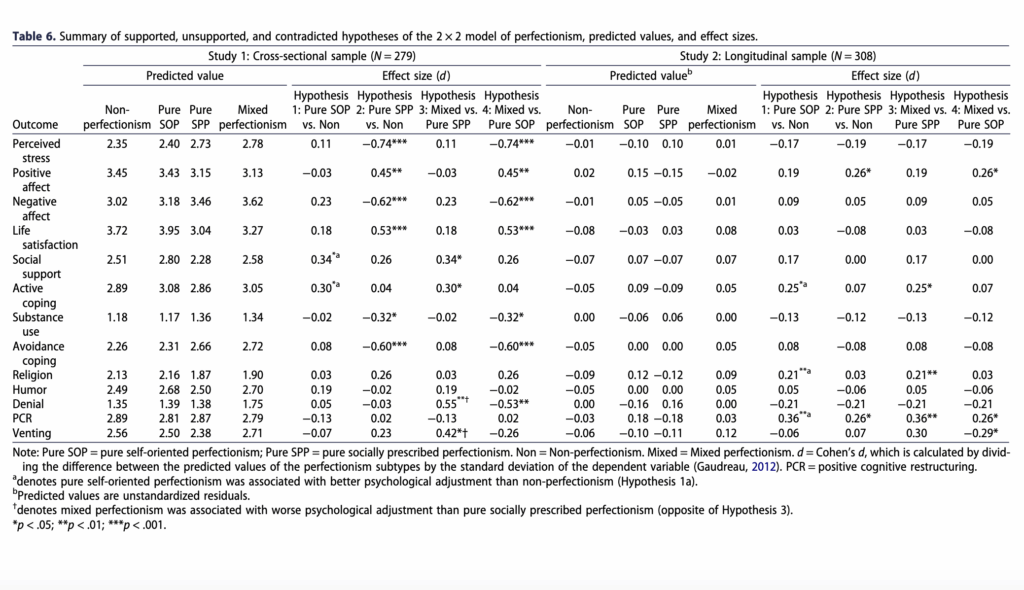
Perfectionism is an important characteristic among university students, given its associations with their well-being and coping. One approach to studying student perfectionism is Gaudreau and Thompson’s (2010) 2 × 2 model of perfectionism, which examines the interaction between self-oriented perfectionism and socially prescribed perfectionism (SPP). The model is useful for studying student perfectionism, but tests in different cultural contexts remain limited, with some suggesting its hypotheses need modification. The article builds on existing research by presenting two novel studies that provide the model’s first tests in predicting university student wellbeing and coping in a Filipino context, as well as tests of alternate cultural makeup and aggravating factor hypotheses for SPP’s role.
Following preregistered protocols, two independent samples of Filipino university students completed questionnaires measuring variables of interest – one cross-sectionally (N = 294) and one longitudinally (N = 324), with a 3-month follow-up. Moderated regression analyses showed support for the model’s hypotheses across both samples, depending on the variable. Findings provided clearer support that students with high SPP or a strong belief that others expect perfection are more vulnerable to poorer well-being and unhealthy coping, making SPP an aggravating factor in the Filipino context.
Modern-day students’ irrational desire to be perfect is alarmingly on the rise (Curran & Hill, 2019). For instance, at the Philippines’ premier university, the University of the Philippines Diliman, many students sought counselling because of perfectionism-related difficulties such as rigidity, setting excessively high expectations, and experiencing academic and parental pressure (Tecson et al., 2018).
As “their mental and physical well-being is threatened by this hidden epidemic of perfectionism” (Curran & Hill, 2018, para. 13), this study hopes to better understand how different combinations of perfectionism dimensions affect well-being and coping among Filipino university students. The results could also support relevant institutions (e.g., schools, mental health professionals, parents) in helping students manage their well-being based on these perfectionism dimensions. Lastly, the results could shed light on how perfectionism affects student well-being in collectivistic cultures, particularly whether Filipino students are more vulnerable to poorer well-being due to their fear of disappointing others brought on by the pressure to meet cultural obligations.
Authors: Jeryl Shawn T. Tan (School of Science, Technology and Health, York St John University | Department of Psychology,University of the Philippines Diliman), Andrew P. Hill (School of Science, Technology and Health, York St John University | Graduate Department of Kinesiology, University of Toronto), and and Daniel J. Madigan (School of Science, Technology and Health, York St John University)
Read the full paper: https://doi.org/10.1080/10615806.2025.2521412