
Candesartan emerges as a safe and effective option for migraine treatment
24 Jul 2026
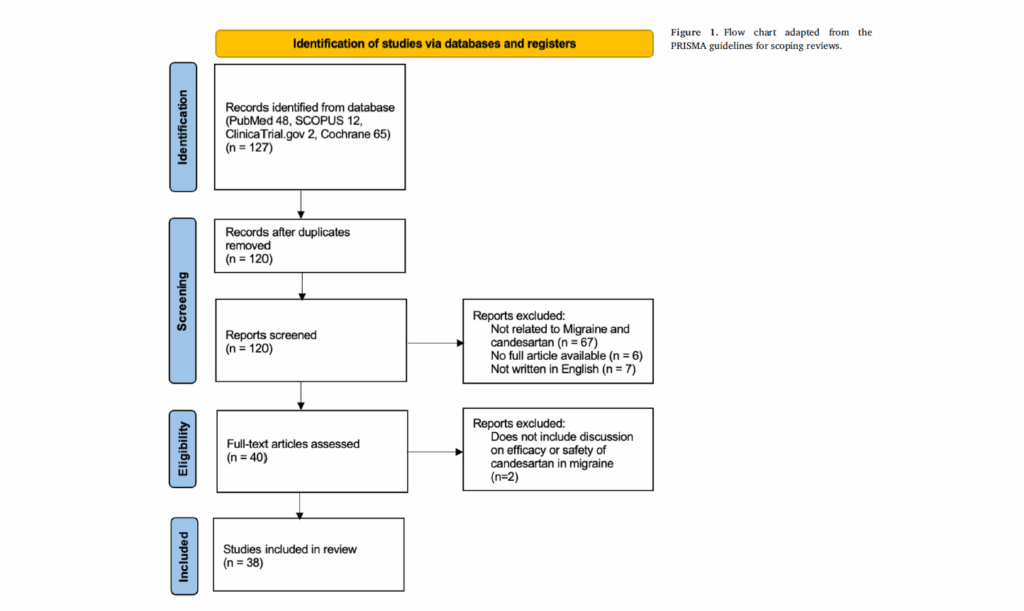
Migraine is a prevalent and debilitating disorder characterized by recurrent headaches that usually last between 4 and 72 hours and are exacerbated by routine physical activities. It is ranked as the third leading cause of global disability. Given its significant health and financial impact, exploring alternative treatments is crucial. Candesartan, an angiotensin-receptor blocker, has shown potential as a management option for migraine. Although studies have explored repurposing candesartan—traditionally used for cardiovascular conditions—for migraine management, no comprehensive review currently exists. To address this gap, this study synthesizes existing literature on the drug’s effectiveness and safety profile for migraine patients.
A scoping review of the literature on the efficacy and safety of candesartan in migraine treatment was performed based on the Preferred Reporting Items for Systematic Reviews and Meta-Analysis for Scoping Reviews guidelines. Thirty-eight articles were included in this review. Candesartan has shown promising results in preventing migraine, particularly in patients with comorbid conditions such as hypertension. Its mechanism may involve modulation of the central pain pathway and vascular functions. Clinical studies support its efficacy in reducing headache days, migraine hours, and related disability, with results comparable to those of established migraine treatments such as beta-blockers. Candesartan’s favorable cost profile, once-daily dosing, and good tolerability further support its potential as a first-line treatment option.
Candesartan offers a promising addition as an effective and safe option for migraine treatment, but further research is necessary. Future studies should focus on its use for acute attacks, dose-response relationships, long-term safety, and cost-effectiveness.
Authors: Ena Elizabeth L. Naoe (Division of Adult Neurology, Department of Neurosciences, College of Medicine and Philippine General Hospital, University of the Philippines Manila), Mykha Marie B. Tabuzo (Division of Adult Neurology, Department of Neurosciences, College of Medicine and Philippine General Hospital, University of the Philippines Manila), and Roland Dominic G. Jamora (Division of Adult Neurology, Department of Neurosciences, College of Medicine and Philippine General Hospital, University of the Philippines Manila | Section of Neurology, Department of Internal Medicine, Cardinal Santos Medical Center, San Juan City)
Read the full paper: https://doi.org/10.1016/j.clinthera.2025.06.003