Care can be a radical response to a crisis
25 Sep 2026
How can we carve out a livable world in the face of immediate and enduring crises?
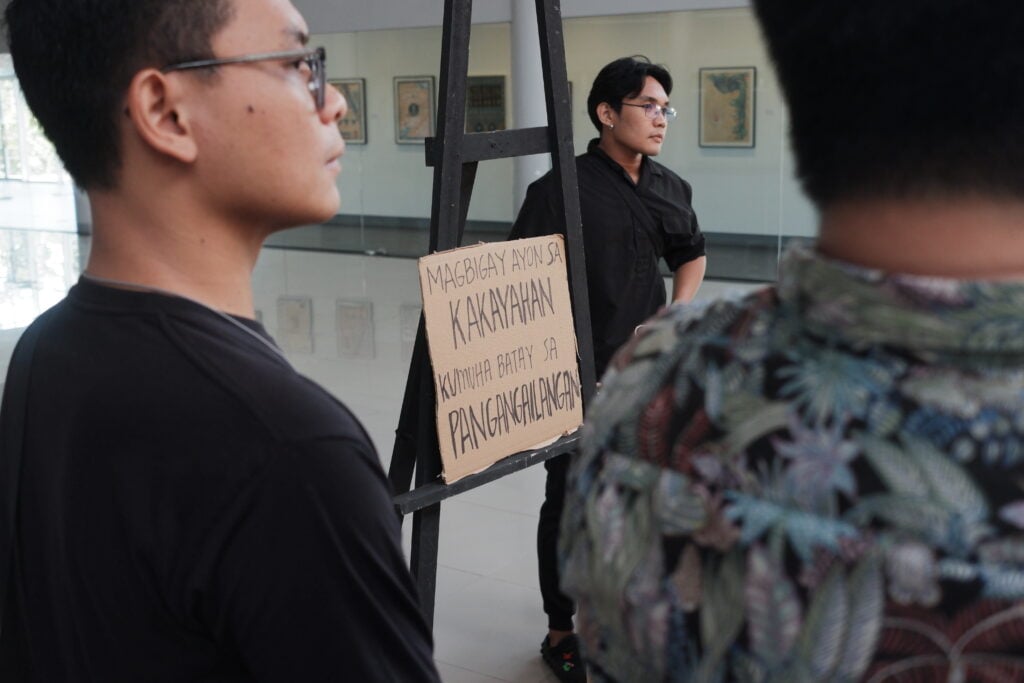
This paper attempts to answer this question by looking into a mutual aid initiative that emerged in the Philippines amid the COVID-19 pandemic. Focusing on the Maginhawa Community Pantry, the paper traces the affect of care in the pantry’s material, linguistic, and spatial dimensions, as well as in the surrounding discourses articulated by those directly involved in its operation. Care, as the analysis reveals, is not merely a moral sentiment or romantic disposition but a radical response to crisis. This radical care, however, is not just a mode of survival; it also carries imprints of hope and productively gestures toward alternative futures beyond structural abandonment and dispossession. The semiotic landscape of the Maginhawa Community Pantry, therefore, embodies political prefiguration—a space of otherwise whose affective sociality envisions a possible world that challenges capitalist, colonial, and neoliberal logics.
Local scholarship has often approached the community pantry phenomenon through two dominant lenses: first, as a demonstration of people’s emergent agency, and second, as an act of resistance. In this paper, I examine this mutual aid movement as a semiotic landscape imbued with affective significations and political prefigurations. Seen in this context, the paper is significant in that it responds to the call for more Linguistic Landscape studies that engage with prefigurative politics by drawing attention to an emergent social movement within the context of the Philippine pandemic. By bridging LL scholarship with prefigurative politics, this research foregrounds the agentive role of language, affect, and other multimodal resources in the construction of experimental spaces where alternative ways of living, relating, and surviving in times of crisis become possible—without losing sight of the structural inequalities that necessitate their emergence. It offers an empirical contribution to what Kerfoot and Stroud (2024) call the sociolinguistics of potentiality, an emerging field that explores “spaces of otherwise,” or sites that challenge normative social arrangements by enabling new forms of practice and relation to emerge—forms that may persist, shift, or disappear depending on the conditions that support them.
Author: Nelson Mangaldan Buso Jr. (Department of English and Comparative Literature, University of the Philippines Diliman)
Read the full paper: https://doi.org/10.1075/ll.24062.bus
Photo by John Paolo Sandicho