
Family interactions and experiences at school and home strongly shape the psychological traits of pre-service teachers

01 Dec 2025
Mental health research has been a key priority among higher education institutions globally to support the advocacy for the holistic well-being of individuals. In the Philippines, studies on mental health most often relate to issues of bullying and suicide cases. The primary objective of this study is to fill the gap in understanding the mental health of Filipino pre-service teachers taking technical-vocational education. Extreme life experiences were also considered, relating these to students’ personality traits or mental health. This study also concentrates on how the family and school environments affect a person’s development.

This research integrated a comprehensive approach that looked into demographic, familial, and personality factors. It broadened the scope of exploring psychological profiles by employing both quantitative and qualitative methods. Specifically, it provided practical implications for mental health and contributed to policy development in the institution under study.

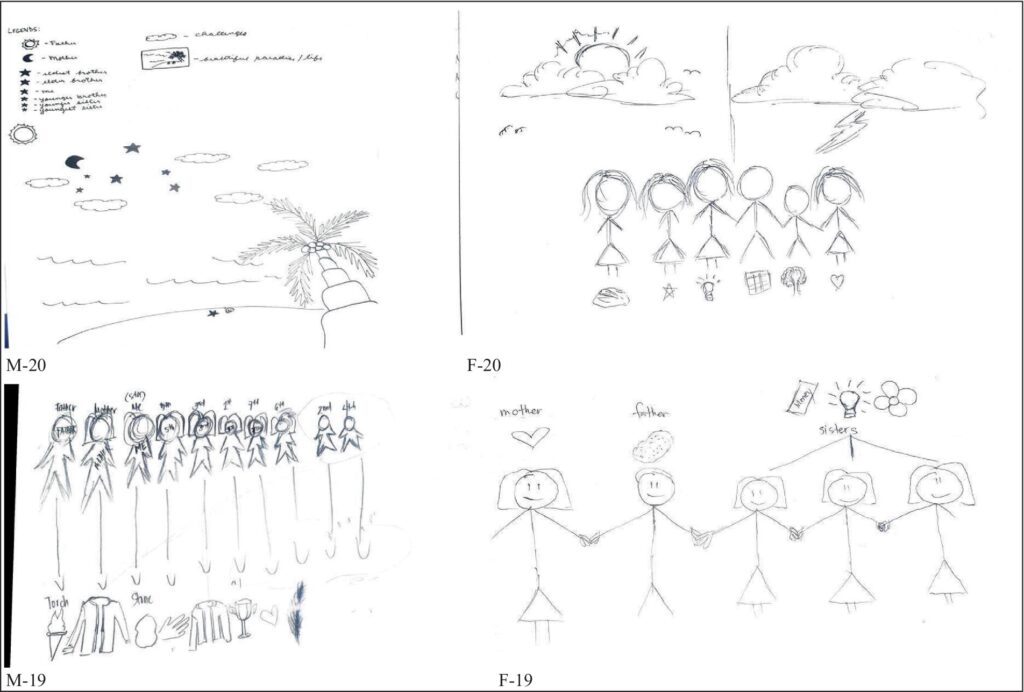
To determine the psychological profile and identify possible interventions, a combination of survey and focused group discussion (FGD) was employed to gather data from 91 students aged 18 to 35. The main reported weaknesses were disordered thinking, feelings of persecution, unconventional behavior, and self-deprecation. In contrast, the key strengths were cooperativeness, self-awareness, cheerfulness, and a strong sense of social responsibility. The results of the FGD indicated that family interactions and prior school and home experiences significantly shaped the students’ psychological attributes.

The results highlight the need for policies and programs for mental health support adapted to each student’s strengths and weaknesses. To ensure that aspiring teachers are equipped to manage both personal and professional demands successfully, the study intends to inform existing academic systems that foster resilience and well-being. This study advocates for focused, evidence-based interventions while advancing our understanding of the mental health of Filipino pre-service teachers.

In addition, this study aligns with Sustainable Development Goal 3 on Good Health and Well-being, highlighting Targets 3.4 and 3.5. Understanding several factors that influence mental health may contribute to preventive strategies through the intervention suggested. It also aligns with Target 4.7 of SDG 4 on Quality Education, which centers on sustainable development. With healthy learners, we can ensure a sustainable future. This study also contributes to achieving the Philippine Development Plan with an emphasis on Chapters 2 and 3 of Part 2, which promote human and social development and reduce vulnerabilities. The paper highlights fostering inclusive growth, improving health and education outcomes, and promoting mental well-being, which supports this target.

Author: January Dechavez (College of Education, Bicol University | College of Education, University of the Philippines Diliman)

Read the full paper: https://www.frontiersin.org/journals/public-health/articles/10.3389/fpubh.2024.1320406/full

Family interactions and experiences at school and home strongly shape the psychological traits of pre-service teachers

Mental health research has been a key priority among higher education institutions globally to support the advocacy for the holistic well-being of individuals. In the Philippines, studies on mental health most often relate to issues of bullying and suicide cases. The primary objective of this study is to fill the gap in understanding the mental health of Filipino pre-service teachers taking technical-vocational education. Extreme life experiences were also considered, relating these to students’ personality traits or mental health. This study also concentrates on how the family and school environments affect a person’s development.

This research integrated a comprehensive approach that looked into demographic, familial, and personality factors. It broadened the scope of exploring psychological profiles by employing both quantitative and qualitative methods. Specifically, it provided practical implications for mental health and contributed to policy development in the institution under study.

To determine the psychological profile and identify possible interventions, a combination of survey and focused group discussion (FGD) was employed to gather data from 91 students aged 18 to 35. The main reported weaknesses were disordered thinking, feelings of persecution, unconventional behavior, and self-deprecation. In contrast, the key strengths were cooperativeness, self-awareness, cheerfulness, and a strong sense of social responsibility. The results of the FGD indicated that family interactions and prior school and home experiences significantly shaped the students’ psychological attributes.

The results highlight the need for policies and programs for mental health support adapted to each student’s strengths and weaknesses. To ensure that aspiring teachers are equipped to manage both personal and professional demands successfully, the study intends to inform existing academic systems that foster resilience and well-being. This study advocates for focused, evidence-based interventions while advancing our understanding of the mental health of Filipino pre-service teachers.

In addition, this study aligns with Sustainable Development Goal 3 on Good Health and Well-being, highlighting Targets 3.4 and 3.5. Understanding several factors that influence mental health may contribute to preventive strategies through the intervention suggested. It also aligns with Target 4.7 of SDG 4 on Quality Education, which centers on sustainable development. With healthy learners, we can ensure a sustainable future. This study also contributes to achieving the Philippine Development Plan with an emphasis on Chapters 2 and 3 of Part 2, which promote human and social development and reduce vulnerabilities. The paper highlights fostering inclusive growth, improving health and education outcomes, and promoting mental well-being, which supports this target.

Author: January Dechavez (College of Education, Bicol University | College of Education, University of the Philippines Diliman)

Read the full paper: https://www.frontiersin.org/journals/public-health/articles/10.3389/fpubh.2024.1320406/full