
Integrating art into the curriculum can deepen students’ understanding and appreciation of mathematical functions
16 Jun 2026
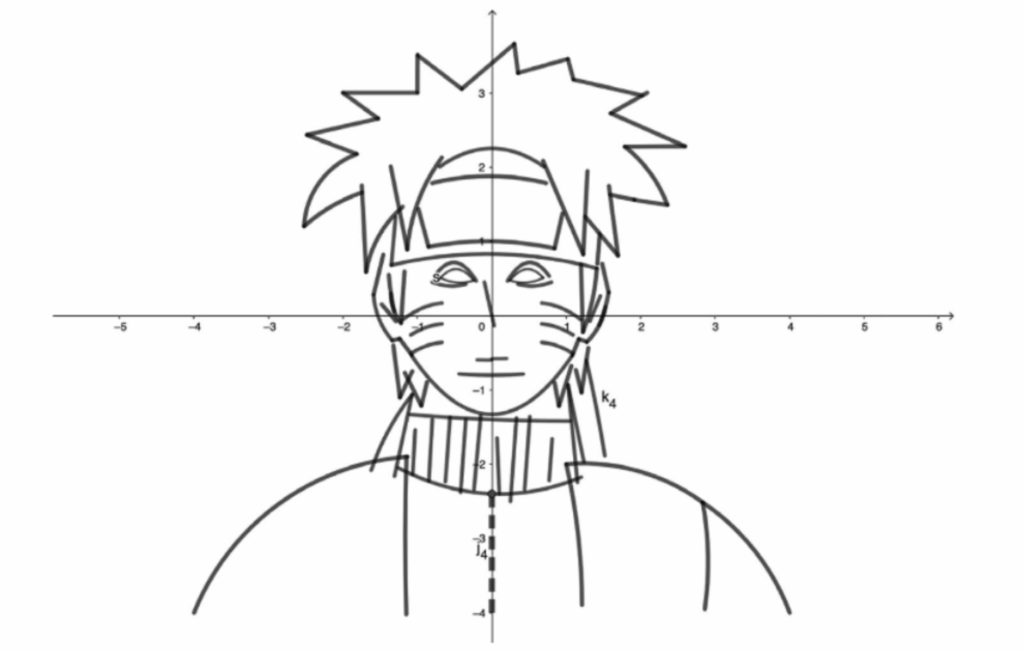
Mathematics can be more than just numbers and formulas; it can also be a medium for creativity, exploration, and self-expression.
In this study, students used a math software called GeoGebra to create artwork from graphs of mathematical functions. They used equations like y = x2 or y = sin(x) to draw pictures. Some created characters from anime, while others designed logos or abstract patterns. To make their art, they applied concepts such as symmetry, reflection, and how changing numbers in equations affects the graph. This project helped students see mathematics in a new light. It encouraged creativity and careful thinking about how functions behave. Some even used sliders to animate their artwork, creating simple dynamic visuals.
The project helped students apply what they learned about the transformation of functions, symmetry, and domain. It also gave them a chance to be creative while using mathematics in a real and meaningful way. This is important because the transformation of functions is not clearly emphasized in the curriculum.
Activities like this are part of what educators call STEAM — an approach that adds Art to Science, Technology, Engineering, and Math. The study suggests that this approach can help students develop a deeper understanding of functions while making learning more enjoyable. The study also shows how teachers can use art projects to check students’ understanding of functions. By combining math, technology, and art, the study gives a new way to support both creativity and learning in the classroom.
Authors: Guillermo Bautista Jr (Johannes Kepler University | UP NISMED, University of the Philippines Diliman), Jemarie Malacapo (Aurora National Science High School, Baler), Florenda Gallos-Cronberg (Gothenburg University), Houssam Kasti (General Studies Department, Qatar University), Noah Dana-Picard (Thierry) (Jerusalem College of Technology), and Zsolt Lavicza (Johannes Kepler University)
Read the full paper: https://onlinelibrary.wiley.com/doi/10.1111/ssm.18373