Low-intensity physical activity through Sheng Zhen Gong supports physical and mental well-being during pregnancy

06 Jan 2026
Maintaining some level of physical activity during normal pregnancy is widely recommended by healthcare providers. However, in many Asian cultures, pregnancy is viewed as a vulnerable period for both mother and fetus, often encouraging sedentary behavior. Numerous studies have shown that various forms of exercise are safe and beneficial during both the antepartum and postpartum periods. These include walking, stationary cycling, aerobic exercise, dancing, stretching, resistance training, and hydrotherapy. In this study, we examined the effects of Sheng Zhen Gong (SZG), a traditional low-impact exercise, on the maternal–fetal dyad.

Forms of mind–body exercise now known as Qigong have been practiced in China for over 4,500 years to promote health and manage illness. Before the mid-20th century, these practices were known by various names, such as Tuna (breathing exercises), Daoyin (guided movement), Jingzuo (sitting meditation), and Xingqi (circulating vital energy). Archaeological artifacts and classical medical texts, including the Yellow Emperor’s Inner Canon, describe movements designed to activate Qi and blood circulation. Over time, these practices evolved into several traditions that persist today, including Medical, Daoist, Buddhist, Confucian, and Martial Arts Qigong. Despite their differences, all aim to cultivate Qi to promote balance and prevent illness.

The term “Qigong” became widely used in the 1950s and refers to the practice of working with Qi, or vital life energy. It has been defined as a mind–body discipline that integrates posture, breathing, and mental focus into a unified practice. Qigong may be practiced internally, where individuals generate Qi themselves, or externally, where trained practitioners direct Qi toward others for therapeutic purposes. It also includes dynamic forms involving movement and static forms focused on stillness and mental tranquility.

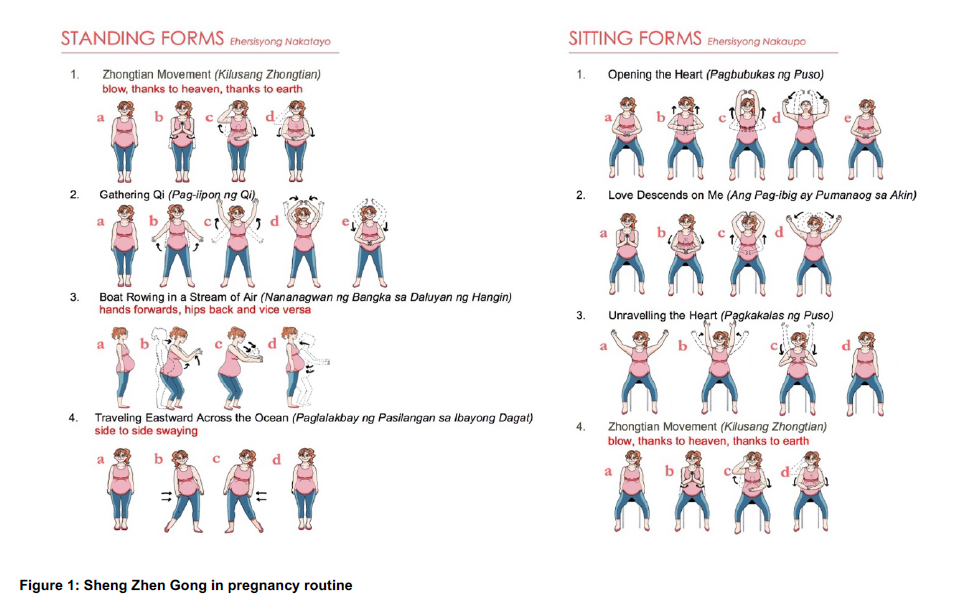
Sheng Zhen Gong is a contemporary form of Qigong that combines gentle movement and meditation. Its practice emphasizes the circulation of Qi to promote physical well-being, emotional balance, and harmony with one’s surroundings. Each posture and movement is accompanied by mental imagery and intention, enhancing mindfulness during practice. Beyond the traditional benefits of Qigong, SZG is believed to promote heightened awareness and inner calm.

In normal pregnancies, Sheng Zhen Gong—a low-intensity exercise—appears to support maternal cardiovascular health, blood glucose regulation, and mental well-being, without evidence of adverse effects on the fetus. In high-risk pregnancies where physical exercise may be contraindicated, the meditative component of SZG may still offer mental health benefits. Further research is needed to evaluate exercise-based interventions alongside other prenatal preventive strategies, particularly using advanced monitoring methods that allow continuous assessment of maternal and fetal physiological responses during activity and rest.

Authors: Clarissa L. Velayo (Department of Physiology, College of Medicine, University of the Philippines Manila | Department of Obstetrics and Gynecology, University of the Philippines – Philippine General Hospital), Sherri Ann L. Suplido (Department of Obstetrics and Gynecology, University of the Philippines – Philippine General Hospital), Alvin Duke R. Sy (Department of Epidemiology and Biostatistics, College of Public Health, University of the Philippines Manila), Ourlad Alzeus G. Tantengco (Department of Physiology, College of Medicine, University of the Philippines Manila), Ruben N. Caragay (College of Medicine, Bicol University) and Manuela T. Zuniga (Capitol Medical Center, Quezon Avenue, Quezon City)

Read the full paper: https://scienggj.org/2024-special-issue-16/

Low-intensity physical activity through Sheng Zhen Gong supports physical and mental well-being during pregnancy

Maintaining some level of physical activity during normal pregnancy is widely recommended by healthcare providers. However, in many Asian cultures, pregnancy is viewed as a vulnerable period for both mother and fetus, often encouraging sedentary behavior. Numerous studies have shown that various forms of exercise are safe and beneficial during both the antepartum and postpartum periods. These include walking, stationary cycling, aerobic exercise, dancing, stretching, resistance training, and hydrotherapy. In this study, we examined the effects of Sheng Zhen Gong (SZG), a traditional low-impact exercise, on the maternal–fetal dyad.

Forms of mind–body exercise now known as Qigong have been practiced in China for over 4,500 years to promote health and manage illness. Before the mid-20th century, these practices were known by various names, such as Tuna (breathing exercises), Daoyin (guided movement), Jingzuo (sitting meditation), and Xingqi (circulating vital energy). Archaeological artifacts and classical medical texts, including the Yellow Emperor’s Inner Canon, describe movements designed to activate Qi and blood circulation. Over time, these practices evolved into several traditions that persist today, including Medical, Daoist, Buddhist, Confucian, and Martial Arts Qigong. Despite their differences, all aim to cultivate Qi to promote balance and prevent illness.

The term “Qigong” became widely used in the 1950s and refers to the practice of working with Qi, or vital life energy. It has been defined as a mind–body discipline that integrates posture, breathing, and mental focus into a unified practice. Qigong may be practiced internally, where individuals generate Qi themselves, or externally, where trained practitioners direct Qi toward others for therapeutic purposes. It also includes dynamic forms involving movement and static forms focused on stillness and mental tranquility.

Sheng Zhen Gong is a contemporary form of Qigong that combines gentle movement and meditation. Its practice emphasizes the circulation of Qi to promote physical well-being, emotional balance, and harmony with one’s surroundings. Each posture and movement is accompanied by mental imagery and intention, enhancing mindfulness during practice. Beyond the traditional benefits of Qigong, SZG is believed to promote heightened awareness and inner calm.

In normal pregnancies, Sheng Zhen Gong—a low-intensity exercise—appears to support maternal cardiovascular health, blood glucose regulation, and mental well-being, without evidence of adverse effects on the fetus. In high-risk pregnancies where physical exercise may be contraindicated, the meditative component of SZG may still offer mental health benefits. Further research is needed to evaluate exercise-based interventions alongside other prenatal preventive strategies, particularly using advanced monitoring methods that allow continuous assessment of maternal and fetal physiological responses during activity and rest.

Authors: Clarissa L. Velayo (Department of Physiology, College of Medicine, University of the Philippines Manila | Department of Obstetrics and Gynecology, University of the Philippines – Philippine General Hospital), Sherri Ann L. Suplido (Department of Obstetrics and Gynecology, University of the Philippines – Philippine General Hospital), Alvin Duke R. Sy (Department of Epidemiology and Biostatistics, College of Public Health, University of the Philippines Manila), Ourlad Alzeus G. Tantengco (Department of Physiology, College of Medicine, University of the Philippines Manila), Ruben N. Caragay (College of Medicine, Bicol University) and Manuela T. Zuniga (Capitol Medical Center, Quezon Avenue, Quezon City)

Read the full paper: https://scienggj.org/2024-special-issue-16/