
Moderate-density pond and pen systems yield the best growth, survival, and biomass for blue swimming crabs
07 Aug 2026
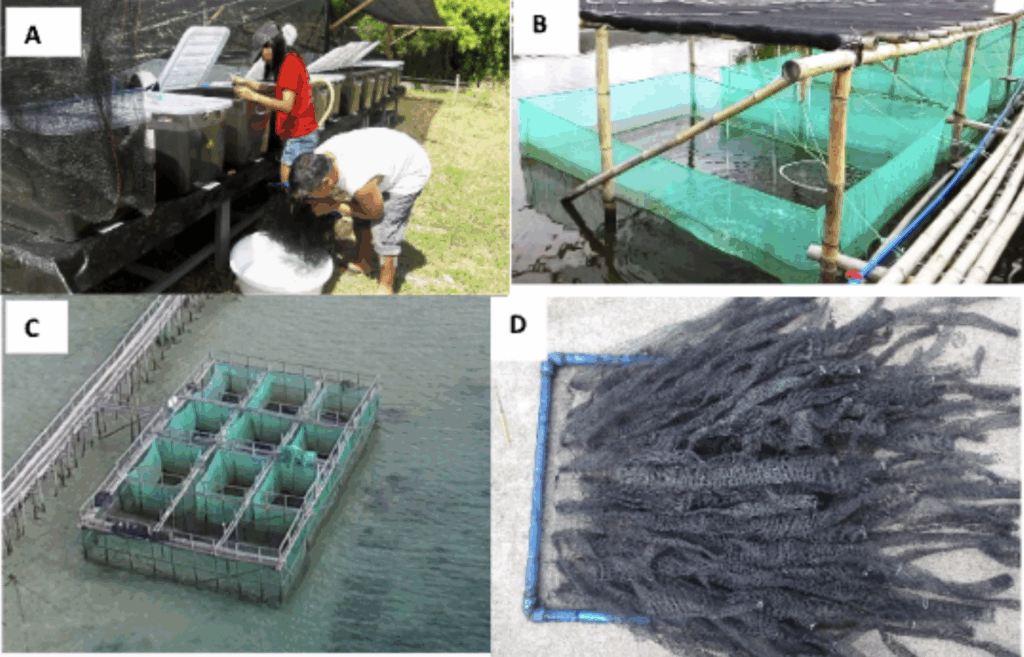
The blue swimming crab (BSC) plays an important role in the crustacean fishing industry. However, its population in the wild has been declining. To help protect the remaining wild crabs and support a continued supply, it is crucial to develop methods for producing seeds in hatcheries. This study examined the growth of hatchery-produced blue swimming crab instars and how frequently they lose limbs when raised in various nursery setups, including outdoor tanks, net cages in ponds, and net cages in pens. It also tested different densities of crabs per square meter (30, 50, and 100) and evaluated how these setups performed during both wet and dry seasons. The present work indicates that when crabs are reared in pond and pen systems at moderate densities (30 to 50 individuals/m²), they yield the most favorable outcomes in terms of growth, survival, and biomass production. The season did not significantly affect the results when the appropriate system was employed, although increased monitoring during the wet season is advisable to minimize stress from environmental fluctuations. Finally, to reduce the incidence of limb loss, which can impact survival and growth, it is essential to design better habitats with sufficient shelter and avoid overcrowding to ensure the production of high-quality crabs for subsequent grow-out phases.
This study highlights the importance of optimizing nursery practices for the successful production of juvenile blue swimming crabs. In the Philippines, Portunus pelagicus makes a significant contribution to the crustacean fishery; however, domestication is not yet fully established due to numerous challenges encountered, especially during the early stages of culture. Consequently, the development of a seed production technology for P. pelagicus is needed to reduce the pressure on the wild crab seed resources. The present work evaluated the growth performance of hatchery-reared BSC juveniles in different nursery culture systems and stocking densities in distinct seasons. The direct effect of different culture systems on cannibalistic behavior in terms of limb loss of the crab was also documented. These findings contribute valuable insights toward the development of more efficient and sustainable nursery protocols, supporting the growth of the aquaculture sector and future stock enhancement efforts to ensure the sustainability of blue swimming crab fisheries.
Authors: Jenalyn Silvestre Lames (Institute of Aquaculture, College of Fisheries and Ocean Sciences, University of the Philippines Visayas, Miagao | Aquaculture Department, Southeast Asian Fisheries Development Center (SEAFDEC/AQD), 5021, Tigbauan), Rex Ferdinand Traifalgar (Institute of Aquaculture, College of Fisheries and Ocean Sciences, University of the Philippines Visayas, Miagao), Fe D. Parado-Estepa (Aquaculture Department, Southeast Asian Fisheries Development Center (SEAFDEC/AQD), 5021, Tigbauan), Erish Estante-Superio (Aquaculture Department, Southeast Asian Fisheries Development Center (SEAFDEC/AQD), 5021, Tigbauan), Sheryll Santander Avanceña (Aquaculture Department, Southeast Asian Fisheries Development Center (SEAFDEC/AQD), 5021, Tigbauan), and Vicente Balinas (Division of Physical Sciences and Mathematics, College of Arts and Sciences, University of the Philippines Visayas, Miagao)
Read the full paper: https://doi.org/10.1007/s10499-025-02029-1