
Problem-Based Learning enhances pupils’ mathematical abilities and fosters a positive attitude toward the subject
30 Sep 2026
Mathematics plays a crucial role in education, and the ability to solve mathematical problems effectively is essential for success across various academic and professional fields. To develop this skill, educators have utilized different teaching methods, including Problem-Based Learning (PBL).
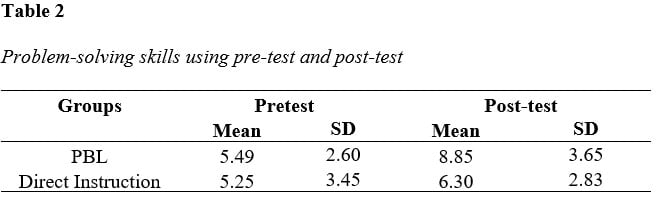
This study used a quasi-experimental design to examine the impact of PBL on improving problem-solving skills, attitudes, and study habits in mathematics among Grade 6 pupils. Before implementing PBL, pupils showed low problem-solving skills, as indicated by their mean percentage scores. Both the control and experimental groups exhibited a positive attitude toward mathematics. While the problem-solving skills of both groups improved, the experimental group showed significantly higher mean scores compared to the control group. Additionally, the pre- and post-surveys on study habits showed similar results, indicating that PBL positively influenced the pupils’ study habits in mathematics.
The findings suggest that PBL is an effective method for enhancing problem-solving skills, attitudes toward mathematics, and study habits. By effectively applying PBL principles, educators can maximize its benefits and foster a supportive learning environment that encourages critical thinking and academic achievement in mathematics.
This approach offers valuable insights for educators, emphasizing how PBL can be utilized to cultivate critical thinking and academic success in mathematics. Future researchers can also build on this study to explore PBL’s broader applications across different grade levels, subjects, and educational contexts, further expanding its potential to improve student outcomes.
Authors: Jerome O. Leonardo II (Department of Education, Division of Laguna, Pila Sub-Office, Pila Elementary School) and Ruth A. Ortega-Dela Cruz (Institute for Governance and Rural Development, University of the Philippines Los Baños)
Read the full paper: https://didacticammath.uken.krakow.pl/article/view/10807