
SARIMA outperforms other models in forecasting corn production
23 Oct 2026
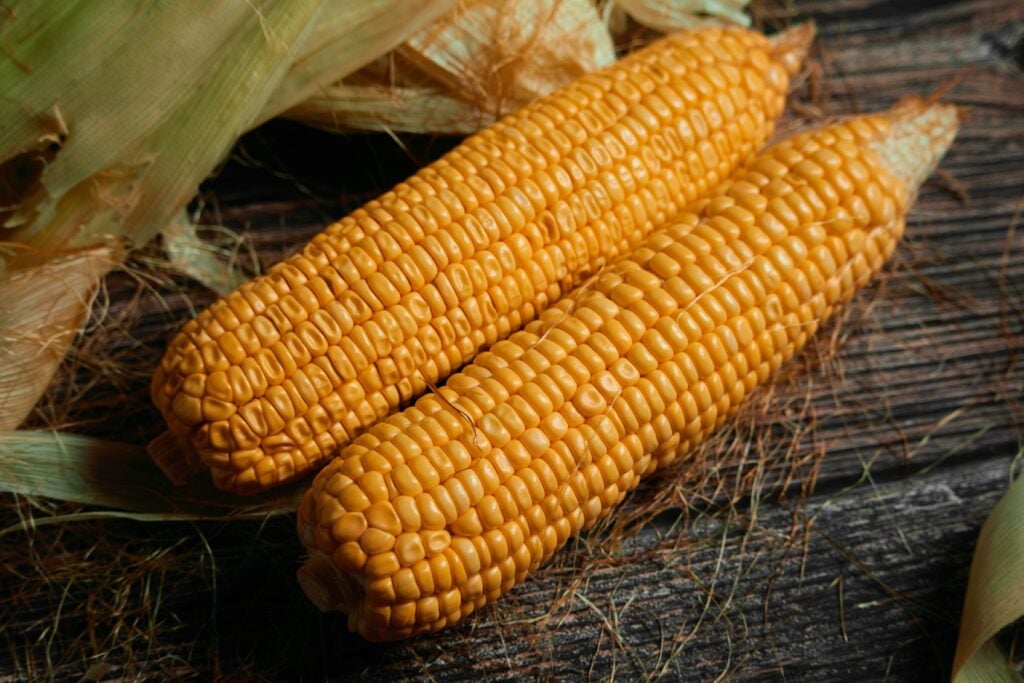
In 2020, the Philippines was among the top 20 corn-producing countries. It is also a major corn-consuming country where households use corn as a primary substitute during rice shortages. Disruptions in corn production can severely affect the economy and food supply. Thus, accurate forecasts of expected corn production are vital to help decision-makers develop preemptive strategies when needed.
This study explores different ways to predict corn production in a province in the Philippines using local data. The researchers compared several forecasting techniques: traditional statistical models like Seasonal Autoregressive Integrated Moving Average (SARIMA) and Holt-Winters Exponential Smoothing, alongside more modern approaches such as Bayesian SARIMA and a type of artificial intelligence called Long Short-Term Memory (LSTM). By analyzing past corn production data, they found that the SARIMA model, which effectively captures seasonal trends, was the most accurate, with Holt-Winters coming in a close second. Capturing trends is critical for timely and informed decision-making by farmers and policymakers. The other methods, Bayesian SARIMA and LSTM, had mixed results.
The study also highlights the practical use of these forecasting models by integrating them into a web application, making it easier for local farmers and policymakers to access and use the predictions. The integration of these models into a user-friendly web application further emphasizes their real-world applicability, enhancing accessibility and usability of predictive insights. Overall, this work lays a solid foundation for improving agricultural forecasting, ultimately contributing to better resource management and sustainable agricultural practices.
This work shows that applying modern statistical techniques can play a key role in enhancing agricultural planning and decision-making. It also suggests that the accuracy of these forecasts could be improved with better data preprocessing, such as handling outliers and missing information, and by including data from other corn-producing regions in the Philippines. Future research might test additional methods like Prophet or TBATS to further boost prediction accuracy.
Authors: Cedric M. Caquilala (Department of Physical Sciences and Mathematics, University of the Philippines Manila), Perlita E. Gasmen (Department of Physical Sciences and Mathematics, University of the Philippines Manila), Alex C. Gonzaga (Department of Physical Sciences and Mathematics, University of the Philippines Manila), Jethro Gem P. Villoria (Department of Mathematics and Statistics, University of Southeastern Philippines), Loreniel E. Añonuevo (Office for Research, Development and Innovation, Mapúa Malayan Colleges Mindanao), Vince Jebryl G. Montero (College of Engineering and Architecture, Mapúa Malayan Colleges Mindanao), and John Riz V. Bagnol (Department of Mathematics and Statistics, University of Southeastern Philippines)
Read the full paper: https://ieeexplore.ieee.org/abstract/document/10778892
Image by Marjhan Ramboyong from Pexels