
Study provides the first confirmed detection of the armyworm Spodoptera pecten in the country
26 Oct 2026
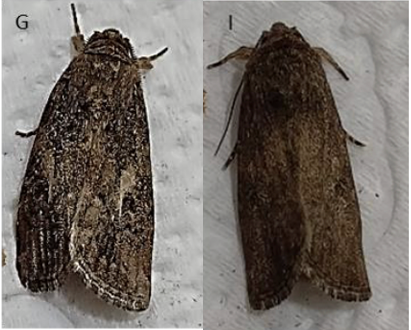
This study reports the first detection of the armyworm Spodoptera pecten Guenée in the Philippines, with specimens collected from ornamental and agricultural landscapes in Laguna and Batangas on Luzon Island. Initially, the unidentified lepidopteran species was reared under laboratory conditions to observe its morphology and life cycle. However, this study primarily emphasizes the use of molecular tools for precise species identification.
Using DNA barcoding, the study generated partial cytochrome oxidase subunit I (COI) gene sequences, which were compared against the National Center for Biotechnology Information (NCBI) database. The results confirmed a 99% similarity with S. pecten samples from Pakistan, Papua New Guinea, and India, establishing its first recorded occurrence in the Philippines. This study highlights the efficacy of DNA barcoding in species identification, demonstrating its robustness in differentiating closely related taxa and tracking evolutionary relationships. The generated genetic data provide critical insights for plant biosecurity officers, aid in accurate species identification, and support pest management specialists in developing targeted control strategies.
This study is significant for many reasons.
■ First Record of Spodoptera pecten in the Philippines – This study provides the first confirmed
detection of Spodoptera pecten in the country, expanding the known geographical range of this pest
and contributing to biodiversity documentation.
■ Improved Pest Management – Accurate species identification using molecular methods is crucial
for developing targeted pest control strategies, minimizing agricultural damage, and ensuring food
security.
■ Enhanced Taxonomic Accuracy – Traditional morphological identification methods have
limitations, especially for closely related species. The use of DNA barcoding (COI gene sequencing)
improves precision and reliability in species classification.
■ Biodiversity and Ecological Insights – The discovery of S. pecten in the Philippines underscores
the need for further research into the diversity, distribution, and ecological roles
of Spodoptera species in the region.
■ Foundation for Future Research – The genetic data generated in this study can serve as a
reference for future evolutionary, ecological, and population genetics studies, particularly in
understanding species dispersal, adaptation, and interactions within agricultural ecosystems.
Authors: Michelle S. Guerrero (National Crop Protection Center, College of Agriculture and Food Science, University of the Philippines Los Baños), Marcela M. Navasero (National Crop Protection Center, College of Agriculture and Food Science, University of the Philippines Los Baños), Rochelle A. Quiñones (National Crop Protection Center, College of Agriculture and Food Science, University of the Philippines Los Baños) and Barbara L. Caoili (National Crop Protection Center, College of Agriculture and Food Science, University of the Philippines Los Baños | Institute of Weed Science, Entomology, and Plant Pathology, College of Agriculture and Food Science, University of the Philippines Los Baños)
Read the full paper: http://issaasphil.org/wp-content/uploads/2024/12/7.-Guerrero-et-al.-2024-Identification-of- armyworm-Spodoptera-pecten-Guenee-FINAL.pdf
Photos by Guerrero et al.