
Thirteen species of the microscopic algae Pinnularia are recorded for the first time in the Philippines
13 Jan 2026
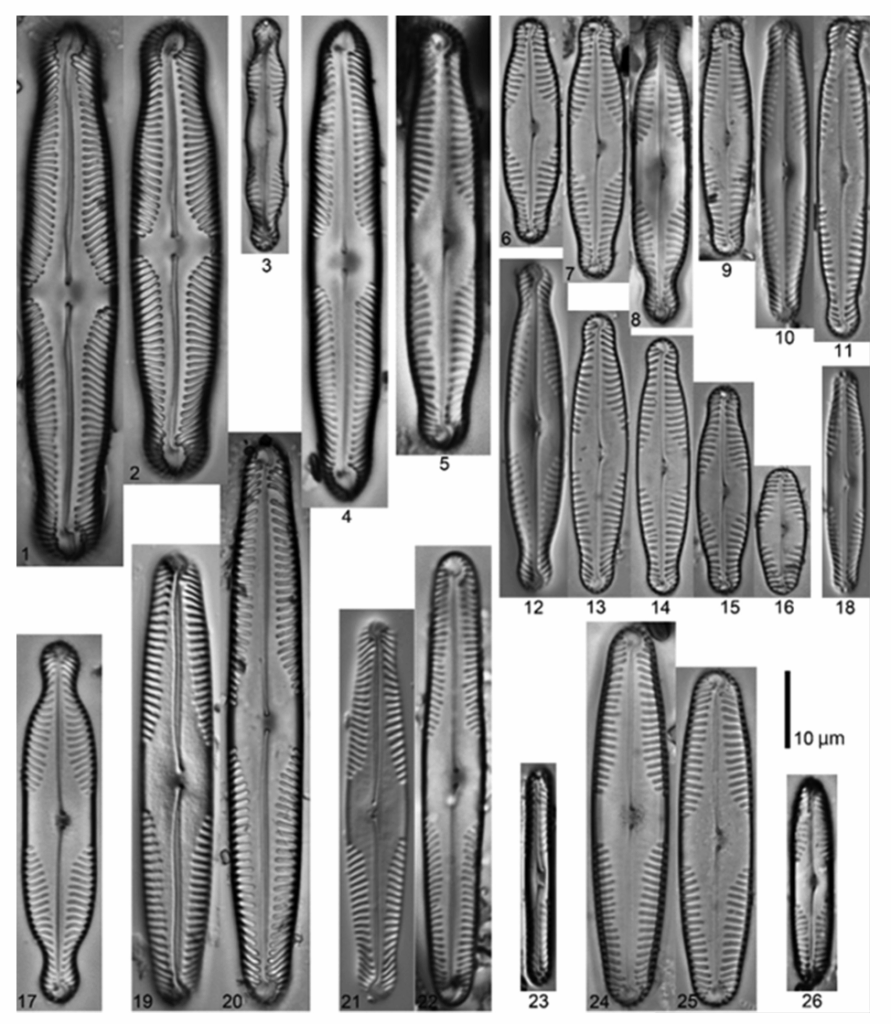
This study explored the tiny algae called Pinnularia—a group of microscopic organisms known as diatoms—in the Marikina River, which flows through the eastern part of Metro Manila. Using a microscope, scientists identified 17 different kinds of Pinnularia living in the river. Out of these, 13 have never been officially recorded in the Philippines before, making them new additions to the country’s list of known freshwater diatoms. Collected from various sections of the river spanning upstream to downstream areas, which encompass a range of land uses within the watershed, each species was carefully described with in-depth taxonomic descriptions and habitat data. While most species identified are cosmopolitan, the presence of Pinnularia divergens var. mesoleptiformis, previously known only from tropical South America, adds a valuable biogeographic insight and may suggest broader distribution patterns or long-distance dispersal events.
These microscopic organisms are important because they can help scientists understand the health of freshwater ecosystems. Thus, this research not only adds to what we know about the biodiversity of the Marikina River, but also helps build a scientific foundation for future studies on water quality, river health, and environmental protection in the Philippines.
This study holds importance as it presents the first comprehensive taxonomic examination of the diatom genus Pinnularia Ehrenberg in the Philippines. Through detailed morphological analysis, a total of 17 taxa were identified from the Marikina River, including three unidentified forms, thereby bringing the total number of known Pinnularia taxa in the country to 57 based on updated nomenclature from Guiry and Guiry (2024) and Kociolek et al. (2024). Overall, this study not only contributes to the enrichment of the global inventory of freshwater diatoms but also establishes a crucial baseline for future ecological, biogeographic, and applied research involving diatoms in the Philippines.
Authors: Milagrosa R. Martinez-Goss (Institute of Biological Sciences, and Museum of Natural History,
University of the Philippines Los Baños), Taisuke Ohtsuka (Lake Biwa Museum), Eldrin DLR. Arguelles (Philippine National Collection of Microorganisms, National Institute of Molecular Biology and Biotechnology, University of the Philippines Los Baños), Tohru Ikeya (Research Institute for Humanity and Nature | College of Science and Engineering, Ritsumeikan University), Elfritzson M. Peralta (Department of Biological Sciences, College of Science, Research Center for the Natural and Applied Sciences, The Graduate School, University of Santo Tomas), Rey Donne S. Papa (Department of Biological Sciences, College of Science, Research Center for the Natural and Applied Sciences, The Graduate School, University of Santo Tomas) and Noboru Okuda (Research Institute for Humanity and Nature | Research Center for Inland Seas, Kobe University)
Read the full paper: https://philjournalsci.dost.gov.ph/annotated-checklist-and-illustrations-of-pinnularia-species-in-the-marikina-river-rizal-luzon-the-philippines/