
To enhance the Alternative Learning System, support must not only provide teachers with tools and training but also address their working conditions and motivation

17 Jul 2026
The digital divide, or the gap between those who have access to technology and those who do not, continues to affect Philippine education. This is especially true in the Alternative Learning System (ALS), a program that provides basic education to learners who are outside the formal school system. In this setup, teachers face unique challenges in using technology for teaching and learning.

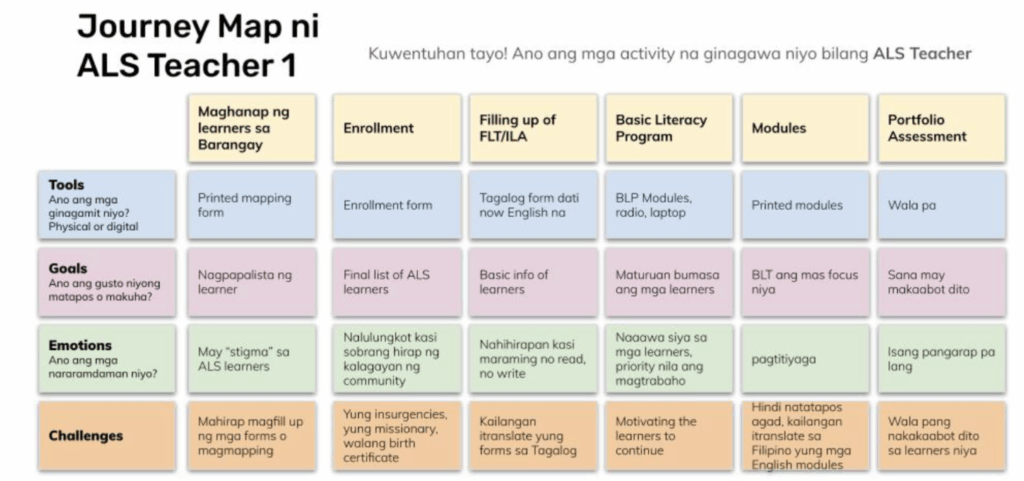
This research explored how ALS teachers across Luzon, Visayas, and Mindanao use digital technology and how their situations affect this process. Using semi-structured interviews, focus group discussions, and design thinking methods, the study examined not only the teachers’ knowledge but also the different conditions that shape their teaching—from individual skills and personal struggles, to school-level support, to broader national policies.

The findings reveal that ALS teachers’ use of technology is shaped by both supportive and limiting factors. National policies, resource constraints, and systemic issues can make integration difficult. At the same time, local initiatives, community involvement, and the dedication of teachers themselves can enable creative and meaningful use of technology. These competing influences affect how teachers develop the ability to integrate technology effectively into their teaching.

For ALS to improve, support must go beyond simply providing tools and training—it should also consider teachers’ working conditions, school management practices, and motivation. By amplifying the voices of ALS teachers, this study offers insights to guide better policies and programs in educational technology, not only in the Philippines but in similar contexts worldwide.

The research work provides a more nuanced understanding of the effective and efficient use of technology in teaching and learning activities of ALS teachers in the Philippines. The research found that ALS teachers’ context was shaped by the push and pull of systemic and localized factors, which can affect the development of ALS teachers’ Technological Pedagogical Content Knowledge (TPACK). These contexts need to be considered in resource programming, capacity-building efforts, school-based management, and boosting the morale and drive of ALS teachers. This study contributes to the broader discourse on TPACK by sharing narratives from the perspectives of ALS teachers to inform policy and programming reforms in educational technology locally and globally.

Author: Luigie Lursh G. Almojano (Department of Social Sciences, University of the Philippines Los Baños)

Read the full paper: https://iafor.org/journal/iafor-journal-of-education/volume-13-issue-2/article-6/

To enhance the Alternative Learning System, support must not only provide teachers with tools and training but also address their working conditions and motivation

The digital divide, or the gap between those who have access to technology and those who do not, continues to affect Philippine education. This is especially true in the Alternative Learning System (ALS), a program that provides basic education to learners who are outside the formal school system. In this setup, teachers face unique challenges in using technology for teaching and learning.

This research explored how ALS teachers across Luzon, Visayas, and Mindanao use digital technology and how their situations affect this process. Using semi-structured interviews, focus group discussions, and design thinking methods, the study examined not only the teachers’ knowledge but also the different conditions that shape their teaching—from individual skills and personal struggles, to school-level support, to broader national policies.

The findings reveal that ALS teachers’ use of technology is shaped by both supportive and limiting factors. National policies, resource constraints, and systemic issues can make integration difficult. At the same time, local initiatives, community involvement, and the dedication of teachers themselves can enable creative and meaningful use of technology. These competing influences affect how teachers develop the ability to integrate technology effectively into their teaching.

For ALS to improve, support must go beyond simply providing tools and training—it should also consider teachers’ working conditions, school management practices, and motivation. By amplifying the voices of ALS teachers, this study offers insights to guide better policies and programs in educational technology, not only in the Philippines but in similar contexts worldwide.

The research work provides a more nuanced understanding of the effective and efficient use of technology in teaching and learning activities of ALS teachers in the Philippines. The research found that ALS teachers’ context was shaped by the push and pull of systemic and localized factors, which can affect the development of ALS teachers’ Technological Pedagogical Content Knowledge (TPACK). These contexts need to be considered in resource programming, capacity-building efforts, school-based management, and boosting the morale and drive of ALS teachers. This study contributes to the broader discourse on TPACK by sharing narratives from the perspectives of ALS teachers to inform policy and programming reforms in educational technology locally and globally.

Author: Luigie Lursh G. Almojano (Department of Social Sciences, University of the Philippines Los Baños)

Read the full paper: https://iafor.org/journal/iafor-journal-of-education/volume-13-issue-2/article-6/