
A venomous box jellyfish previously known from Japan is now documented in Philippine waters and may represent a new species
09 Jan 2026
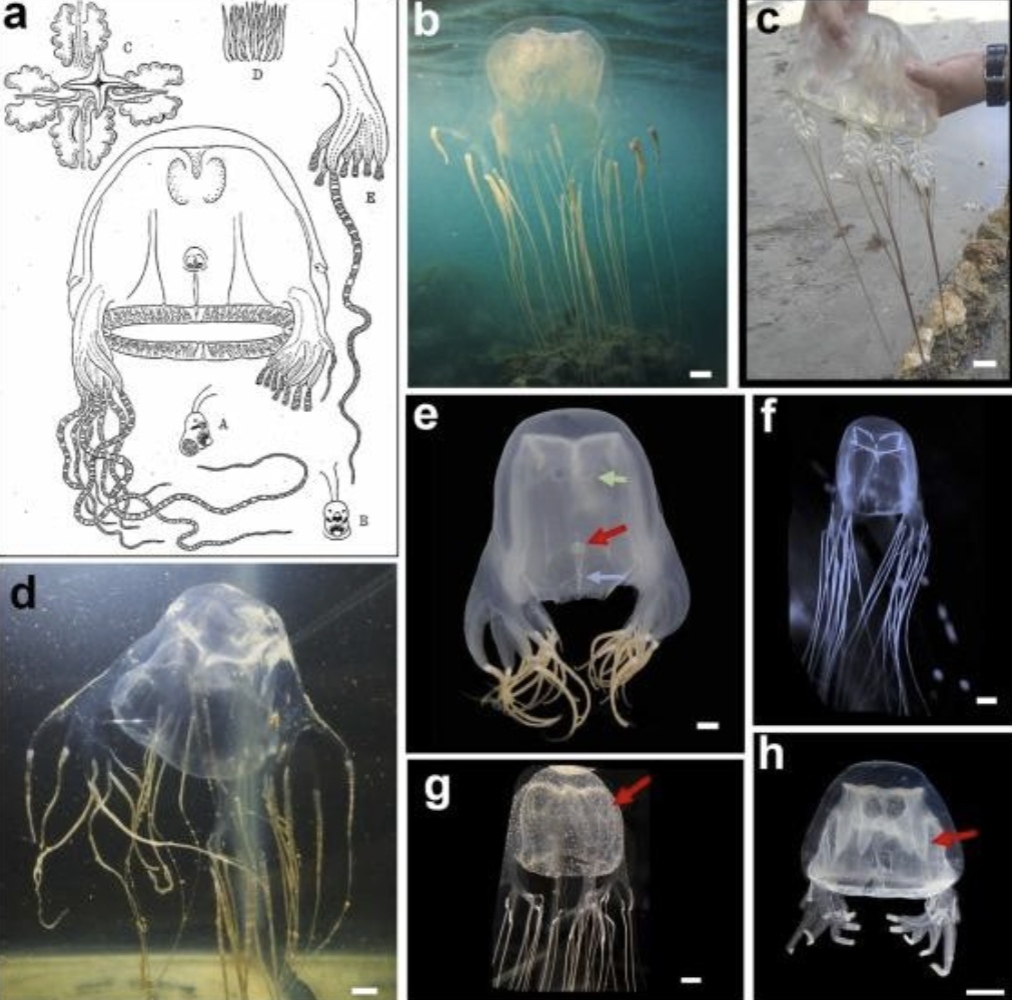
Box jellyfish stings pose a significant threat to public safety, particularly since some species are known to cause severe injuries and even death from documented envenomations. In this study, a species called Chironex yamaguchii, which possesses a potent venom, is now documented to be present in Philippine waters. Originally, this species of box jellyfish is known to be located in the waters surrounding Japan. The form and structure of samples collected from various locations around the Philippines were evaluated, and the results point to C. yamaguchii as the species designation. However, molecular analysis showed that by checking specific parts of the jellyfish’s DNA, and by comparing it to Japan’s Chironex samples, subtle differences were noted, indicative of potential new Philippine Chironex species, but this requires further investigation. Correct identification of the species causing jellyfish-attributed envenomations is crucial for drafting policies for conservation and public health concerns.
The morphological and molecular investigations of the box jellyfish samples collected in Philippine waters, as demonstrated in the study, confirmed the presence of the venomous C. yamaguchii. Most jellyfish stings have little to no association with the species of causation. Through this study, and with the clear evidence that C. yamuguchii is present in Philippine waters, awareness can be heightened, especially for those who are at higher risk of envenomations, such as the coastal fishermen, marine researchers, and tourists. Proper identification of the jellyfish can aid in formulating policies that can both protect the species and lessen the cases of envenomations by educating the public in areas where they are most likely to bloom or get translocated.
Authors:
Sheldon Rey Boco (The Philippine Jellyfish Stings Project, Tacloban | School of Environment and Science, Gold Coast Campus, Griffith University | The Philippine Jellyfish Stings Project, Brisbane, Queensland), Christine Gloria Grace Capidos (The Philippine Jellyfish Stings Project, Tacloban | Samar State University | The Philippine Jellyfish Stings Project, Brisbane, Queensland), Raffy Jay Fornillos (DNA Barcoding Laboratory, Institute of Biology, University of the Philippines Diliman), Phuping Sucharitakul (School of Environment and Science, Gold Coast Campus, Griffith University), Jonathan W. Lawley (School of Environment and Science, Gold Coast Campus, Griffith University), Dennis Talacay (The Philippine Jellyfish Stings Project, Tacloban | The Philippine Jellyfish Stings Project, Brisbane, Queensland), Allen G. Collins (National Systematics Lab of NOAA Fisheries, Smithsonian National Museum of Natural History), Ian Kendrich Fontanilla (DNA Barcoding Laboratory, Institute of Biology, University of the Philippines Diliman), Joseph Elliz Comendador (National Museum of Natural History of the National Museum of the Philippines) and Facundo Rey M. Ladiao (Biology Department, College of Arts and Sciences, Leyte Normal University)
Read the full paper: https://www.sciencedirect.com/science/article/pii/S2352485525000246