
E-cigarettes may have less impact on the development of tooth decay and periodontal disease than traditional cigarettes
16 Mar 2026
Cigarette smoking is a known risk factor for numerous health problems, including respiratory infections and cancers. It is also associated with poor oral health and an increased risk of dental caries. Studies have shown that smoking promotes the growth and colonization of oral pathogens linked to dental caries, particularly Streptococcus mutans. S. mutans adheres to tooth surfaces and forms biofilms, enabling it to colonize the dental surface. In the presence of fermentable carbohydrates, S. mutans causes damage to the tooth’s hard structure.
To mitigate the adverse effects of smoking cigarettes on human health, the use of electronic cigarettes (e-cigarettes) has been introduced as an alternative. However, there is a lack of information regarding the effect of e-cigarettes on humans, including their effect on oral health. Little is known about their effects on the oral microbiota, particularly on those associated with dental caries. This study aimed to determine the effects of e-cigarettes on the primary bacterial contributor to dental caries, S. mutans. Specifically, we report the effects of e-cigarette liquid on the growth, biofilm formation, lactic acid production, and stress tolerance of S. mutans.
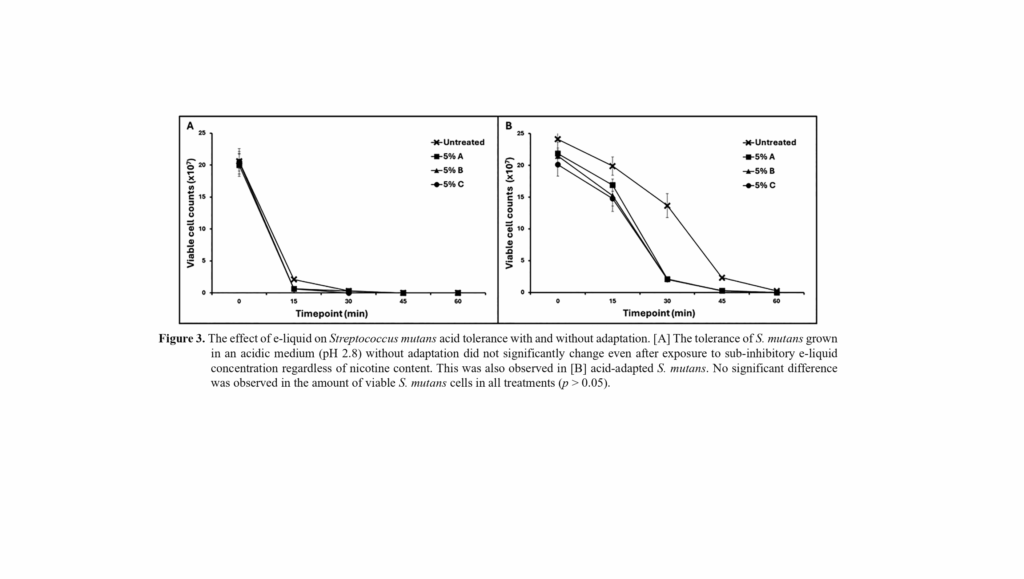
Our results showed a decrease in S. mutans growth with increasing e-liquid concentrations. Notably, e-liquid concentrations of 10% or higher completely inhibited S. mutans growth, regardless of nicotine content. Biofilm formation, lactic acid production, and survival in acid and oxidative-stressed environments were only minimally affected at the sub-inhibitory concentration of 5%, regardless of nicotine content. These findings suggest that e-cigarettes may have a limited effect on the physiology of S. mutans. However, it is important to emphasize that e-cigarettes are not without health risks and that their long-term health effects warrant further investigation.
Authors: Jann Eldy L. Daquioag (Institute of Biology, College of Science, University of the Philippines Diliman), Luis Miguel R. Foronda (East Avenue Medical Center), and Gil M. Penuliar (Institute of Biology, College of Science, University of the Philippines Diliman)
Read the full paper: https://philjournalsci.dost.gov.ph/effects-of-electronic-cigarette-liquid-on-the-growth-biofilm-formation-lactic-acid-production-and-stress-tolerance-of-streptococcus-mutans/