
The inclusion of bignay pomace reduces the estimated glycemic index of common local grains during digestion
27 Mar 2026
Bignay [Antidesma bunius (L.) Spreng] is a fruit widespread in the Philippines. It is usually consumed in processed form as juice, concentrate, or wine. The skin, seeds, and some of the leftover pulp, known as pomace, are discarded in the process. But since it consists of peel and seeds, pomace contains high dietary fiber, which can increase the viscosity of food and, in turn, slow the rate at which digestive enzymes access starch granules. As a result, the starch is broken down more slowly, which prevents a rapid spike in blood sugar after eating.
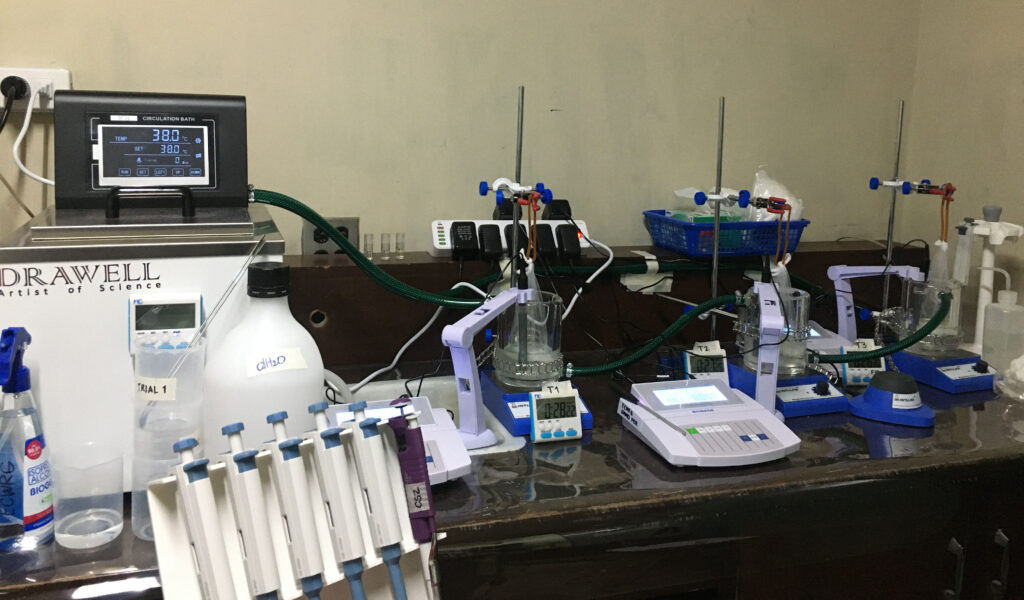
This study examined at the laboratory scale the effect of bignay pomace on the estimated glycemic index (eGI) of commonly consumed local grains when digested together. The results of the experiments showed that adding 1% freeze-dried bignay pomace led to significant reductions in the estimated glycemic index and hydrolysis index (15–32%) during a two-stage simulated in vitro digestion of rice, adlai, white corn grits (WCG), a 50:50 rice:adlai mix, and a 70:30 rice:WCG mix.
Further analysis indicated that total dietary fiber and resistant starch in the grains influenced eGI, as these components slowed starch digestion. Bignay pomace notably reduced the rate of in vitro digestion of local grains, suggesting its potential to improve the glycemic index. This study provides important baseline data for exploring the use of bignay pomace as a food supplement for preventing non-communicable diseases, particularly obesity and type 2 diabetes, which are both lifestyle-driven.
There has been a growing interest in functional foods as people increasingly adopt healthier lifestyles. The use of underutilized fruits such as bignay is currently being investigated for their high amount of bioactive substances with health-promoting effects, particularly in addressing non-communicable diseases such as obesity and diabetes mellitus. Despite the many health benefits of bignay, no studies have examined its effect when digested with commonly consumed grains such as rice.
Having a deeper understanding of starch’s digestibility is important in crafting solutions to regulate postprandial blood glucose levels, which is essential in lowering the risk of nutrition-related diseases such as obesity and type 2 diabetes. Incorporating an underutilized fruit with bioactive capacities in a staple food like rice is a practical approach. Hence, the findings of this study can serve as baseline data for the development of bignay as a functional food ingredient that can be easily integrated into the Filipino diet.
Authors: Jonina Marie Tengco (Institute of Food Science and Technology, College of Agriculture and Food Science, University of the Philippines Los Baños | Department of Science and Technology – Science Education Institute), Florencio Collado Reginio Jr. (Institute of Food Science and Technology, College of Agriculture and Food Science, University of the Philippines Los Baños), Gilda Melanie Babaran (Institute of Food Science and Technology, College of Agriculture and Food Science, University of the Philippines Los Baños), Claire Zubia (Institute of Food Science and Technology, College of Agriculture and Food Science, University of the Philippines Los Baños), Y. Ogawa (Graduate School of Horticulture, Chiba University) and Sheba Mae Duque (Institute of Food Science and Technology, College of Agriculture and Food Science, University of the Philippines Los Baños)
Read the full paper: https://www.myfoodresearch.com/uploads/8/4/8/5/84855864/_19__fr-2023-187_tengco.pdf