
The language provisions deliberated during the 1986 Constitutional Commission reflected power asymmetries inherited from colonial history
13 Oct 2026
In 1946, a year after the end of World War II, the Philippines gained formal independence from any colonial rule. However, despite achieving sovereignty, the nation continued to operate within social, cultural, and political institutions deeply rooted in its Spanish and American colonial legacies.
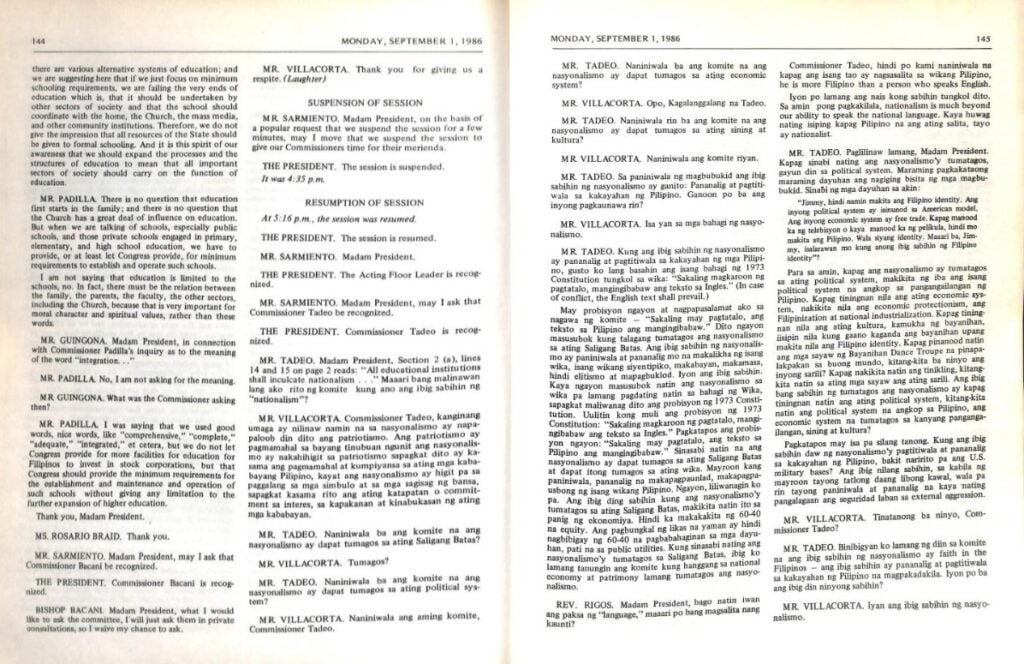
This study complicates our understanding of the language policies in the 1987 Philippine Constitution by providing more critical attention to the deliberations that took place during their creation. It reveals that deliberations on language provisions during the 1986 Constitutional Commission were influenced by unequal power structures deeply rooted in colonial history. As such, rather than being neutral or fair, these language provisions reflect lingering colonial influences that continue to affect language policymaking and planning in the Philippines. The research identifies two key issues: first, how colonial history and racial biases shaped discussions on language during the Constitutional Commission, leading to the erasure or forgetting of past colonial injustices (a phenomenon called “imperial amnesia”); and second, how economic ideas have influenced language policies, promoting language as a commodity rather than recognizing its cultural and social significance. These findings show that even though the Philippines is no longer under colonial rule, the effects of colonialism still shape the creation of its language policies.
This study offers a critical intervention in the discourse on Philippine language policy by interrogating the often-overlooked colonial underpinnings of the 1987 Constitution’s language provisions. By revisiting the deliberations of the 1986 Constitutional Commission, the study exposes how coloniality—through the racialization of language and the presence of linguistic entrepreneurial discourses—continues to shape language policymaking in the country. The analysis highlights, among other things, how imperial amnesia obscures the historical violence of racial-linguistic hierarchies and inequalities, while neoliberal framings reinforce linguistic entrepreneurship, thereby sustaining the legacy of colonial power structures in language policymaking. This work is significant as it challenges and looks beyond current language policies, urging scholars and policymakers alike to recognize their colonial moorings and resist the embedded colonial logics that shaped their creation. By unsettling conventional understandings of language policies, the study hopes to pave the way for a more decolonial and equitable approach to linguistic justice in the Philippines.
Author: Nicko Enrique L. Manalastas (Department of English and Comparative Literature, University of the Philippines Diliman
Read the full paper: https://doi.org/10.1080/14664208.2025.2481345