
Bamboo and corn roots host different beneficial bacteria with plant growth–promoting potentials

10 Nov 2026
Plant growth–promoting bacteria (PGPB) are beneficial microorganisms living in close association with plants. They support plant growth and help protect against diseases through various processes. These bacteria are proven to be effective biofertilizers, which offer a promising alternative to expensive and environmentally harmful chemical fertilizers.

Over the last two decades, researchers have successfully isolated and characterized plant growth-promoting bacteria from the rhizosphere of various plants worldwide, and their beneficial effects on crop growth and yield have been well-documented. In the Philippines, only a few plant species have been investigated for associated beneficial soil bacteria.

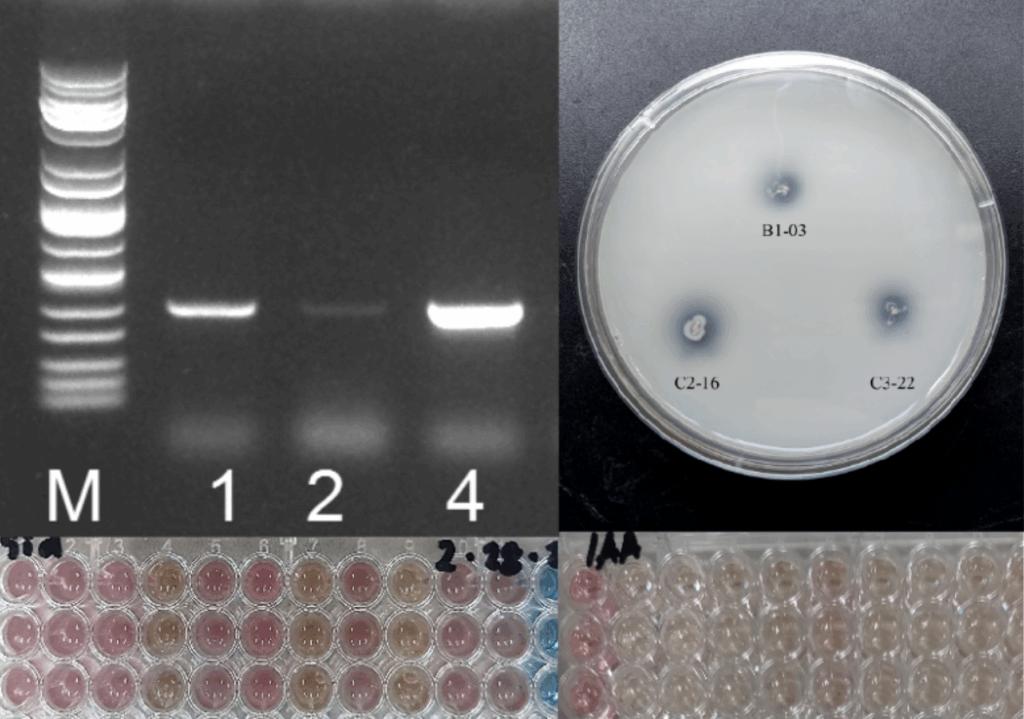
This study focused on finding and identifying PGPB capable of fixing nitrogen, a major plant nutrient, with additional plant-beneficial properties. We collected root samples from bamboo and corn plants grown in Cagayan Province, Philippines. From these samples, 27 bacterial strains were isolated and identified using DNA-based techniques. Many of the strains belonged to the genera Leclercia, Pantoea, Klebsiella, and Exiguobacterium. Laboratory experiments showed that all strains exhibited at least two plant growth–promoting (PGP) activities. Four isolates (15%), mostly from the genus Klebsiella, have the genetic marker for nitrogen fixation, a biological process by which nitrogen from the air is converted into a plant-usable form (ammonia). Eleven isolates (41%) solubilized phosphate (P), another plant-essential nutrient, with Pantoea species being the most efficient. Meanwhile, all strains (100%) synthesized the plant growth hormone indole-3-acetic acid (IAA), while 24 (89%) produced siderophores, which help plants absorb iron. Notably, two strains – Enterobacter roggenkampii strain B1-01 and Klebsiella oxytoca strain B1-04 – showed all the tested PGP traits.

Our findings demonstrated that the roots of bamboo and corn host a variety of beneficial bacteria with several PGP potentials. These strains could be used for future studies and the development of products that support sustainable agriculture.

Authors: Camille Andrea R. Flores, Maria Auxilia T. Siringan, and Mary Ann Cielo V. Relucio-San Diego (Microbiological Research and Services Laboratory, Natural Sciences Research Institute, University of the Philippines Diliman)

Read the full paper: https://pmc.ncbi.nlm.nih.gov/articles/PMC11987075/

Image by Flores, Siringan and Relucio-San Diego

Bamboo and corn roots host different beneficial bacteria with plant growth–promoting potentials

Plant growth–promoting bacteria (PGPB) are beneficial microorganisms living in close association with plants. They support plant growth and help protect against diseases through various processes. These bacteria are proven to be effective biofertilizers, which offer a promising alternative to expensive and environmentally harmful chemical fertilizers.

Over the last two decades, researchers have successfully isolated and characterized plant growth-promoting bacteria from the rhizosphere of various plants worldwide, and their beneficial effects on crop growth and yield have been well-documented. In the Philippines, only a few plant species have been investigated for associated beneficial soil bacteria.

This study focused on finding and identifying PGPB capable of fixing nitrogen, a major plant nutrient, with additional plant-beneficial properties. We collected root samples from bamboo and corn plants grown in Cagayan Province, Philippines. From these samples, 27 bacterial strains were isolated and identified using DNA-based techniques. Many of the strains belonged to the genera Leclercia, Pantoea, Klebsiella, and Exiguobacterium. Laboratory experiments showed that all strains exhibited at least two plant growth–promoting (PGP) activities. Four isolates (15%), mostly from the genus Klebsiella, have the genetic marker for nitrogen fixation, a biological process by which nitrogen from the air is converted into a plant-usable form (ammonia). Eleven isolates (41%) solubilized phosphate (P), another plant-essential nutrient, with Pantoea species being the most efficient. Meanwhile, all strains (100%) synthesized the plant growth hormone indole-3-acetic acid (IAA), while 24 (89%) produced siderophores, which help plants absorb iron. Notably, two strains – Enterobacter roggenkampii strain B1-01 and Klebsiella oxytoca strain B1-04 – showed all the tested PGP traits.

Our findings demonstrated that the roots of bamboo and corn host a variety of beneficial bacteria with several PGP potentials. These strains could be used for future studies and the development of products that support sustainable agriculture.

Authors: Camille Andrea R. Flores, Maria Auxilia T. Siringan, and Mary Ann Cielo V. Relucio-San Diego (Microbiological Research and Services Laboratory, Natural Sciences Research Institute, University of the Philippines Diliman)

Read the full paper: https://pmc.ncbi.nlm.nih.gov/articles/PMC11987075/

Image by Flores, Siringan and Relucio-San Diego