
Tetanus remains to have a high incidence and mortality rate in the Philippines despite a decrease in the total number of cases
12 Nov 2026
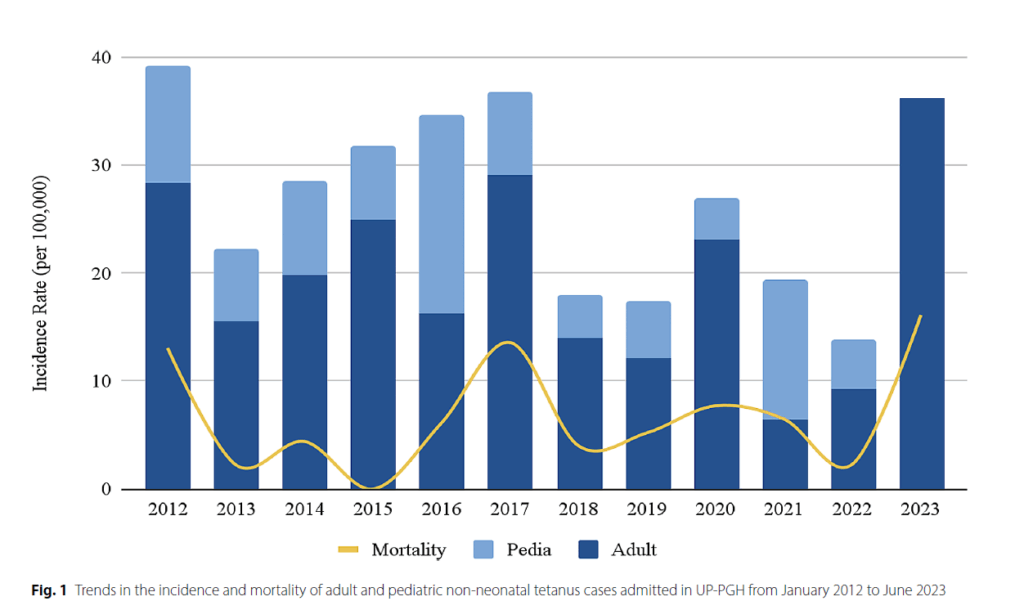
Tetanus is a life-threatening but preventable neurologic disorder characterized by trismus and muscle spasms. Despite its decreasing global incidence, it remains endemic in resource-limited settings such as the Philippines. This study aimed to determine the incidence, demographic characteristics, risk factors, clinical presentation, management, complications, and outcomes of non-neonatal tetanus cases in a tertiary hospital in the Philippines. It also aimed to compare the clinical profile and outcomes between the adult and pediatric subgroups. The insights could potentially contribute to overall improvement in the management of tetanus.
The study used a retrospective cross-sectional design including all adult and pediatric non-neonatal tetanus patients admitted at the University of the Philippines-Philippine General Hospital from January 2012 to June 2023. Data were extracted from department censuses and inpatient charts. One hundred thirty-eight cases were included. The incidence rate was 0.03%, while the mortality rate was 29%. The majority of patients were males presenting with trismus and spasms after sustaining a puncture wound. Chronic hypertension was associated with an increased hazard of death by 4.5 times, while treatment with magnesium sulfate was associated with a decreased hazard of death by 35 times. The mode of infection and the medications administered differed between the adult and pediatric subgroups.
Although the total number of cases has decreased over the past decade, tetanus remains to have a high incidence and mortality rate in the Philippines. Increasing vaccination coverage, improving public awareness, and educating health professionals can help reduce morbidity and mortality from this disease.
Authors: Pamela Danielle T. Lanuza (Division of Adult Neurology, Department of Neurosciences, College of Medicine and Philippine General Hospital, University of the Philippines Manila), Jao Jarro B. Garcia (Division of Adult Neurology, Department of Neurosciences, College of Medicine and Philippine General Hospital, University of the Philippines Manila), Christian Wilson R. Turalde (Department of Physiology, College of Medicine, University of the Philippines Manila | National Teacher Training Center for the Health Professions, University of the Philippines Manila) and Mario Jr. B. Prado (Department of Physiology, College of Medicine, University of the Philippines Manila | Department of Epidemiology and Biostatistics, College of Public Health, University of the Philippines Manila)
Read the full paper: https://doi.org/10.1186/s12879-024-09037-1
Image by Lanuza, Garcia, Turalde and Prado