
A functional ingredient using pomace, a byproduct of pineapple processing, was developed as a sustainable approach to waste management
05 Jan 2026
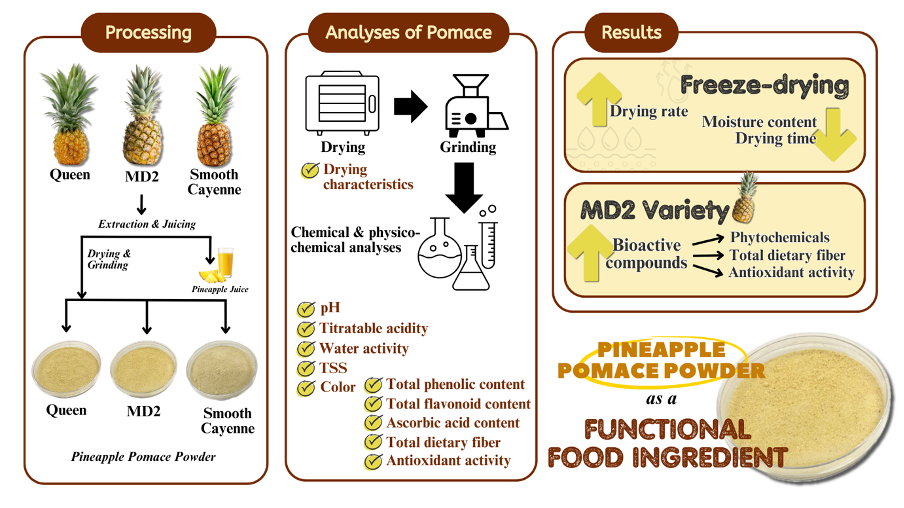
The study aimed to develop a functional ingredient using pomace, a byproduct of pineapple juice processing from selected varieties in the Philippines.
In a preliminary trial, cabinet- and freeze-drying methods were compared to determine the ideal drying technique for preparing pineapple pomace powder (PPP) as a functional ingredient. Pomace samples were collected from three pineapple varieties: Smooth Cayenne, MD2, and Queen. The collected pomace samples were dried, ground, sieved, and analyzed for bioactive compounds, including total phenolic content (TPC), total flavonoid content (TFC), ascorbic acid content (AAC), total dietary fiber (TDF), and antioxidant activity using DPPH, FRAP, and ABTS assays. The PPP with the highest concentration of bioactive compounds was selected for functional ingredient development. The physicochemical properties of the developed PPP were also evaluated.
The findings revealed that freeze-drying resulted in a significantly higher drying rate and lower moisture content compared to cabinet-drying. Among the three pineapple varieties, freeze-dried MD2 pomace exhibited the highest concentrations of bioactive compounds and antioxidant activity. The study concluded that freeze-drying MD2 pineapple pomace was the most effective method for developing a functional ingredient. The resulting freeze-dried PPP had a moisture content of 9.65%, a water activity of 0.35, a pH of 3.89, a titratable acidity of 2.70% (as citric acid), a total soluble solids content of 2.6 °Brix, and a light-yellow color based on CIE Lab color space values (L* = 84.44, a* = 0.34, and b* = 27.29).
The resulting pineapple pomace powder was rich in bioactive compounds, including high levels of total phenolics, total flavonoids, ascorbic acid, total dietary fiber, and antioxidant activity. Utilizing pineapple pomace can help address environmental concerns related to waste management while enhancing the nutritional value of foods through the application of this developed functional ingredient.
Authors: Merly T. Panganiban (Institute of Food Science and Technology, College of Agriculture and Food Science, University of the Philippines Los Baños), Camila Mari L. Pagatpatan, Jonina Marie J. Tengco (Institute of Food Science and Technology, College of Agriculture and Food Science, University of the Philippines Los Baños), and Florencio C. Reginio Jr. (Institute of Food Science and Technology, College of Agriculture and Food Science, University of the Philippines Los Baños)
Read the full paper: https://cmuj.cmu.ac.th/nlsc/journal/article/1120