
Child-directed language across Murrinhpatha, Pitjantjatjara, Qaqet, Tagalog, and Inuktitut reveals striking commonalities alongside clear differences
05 Nov 2026
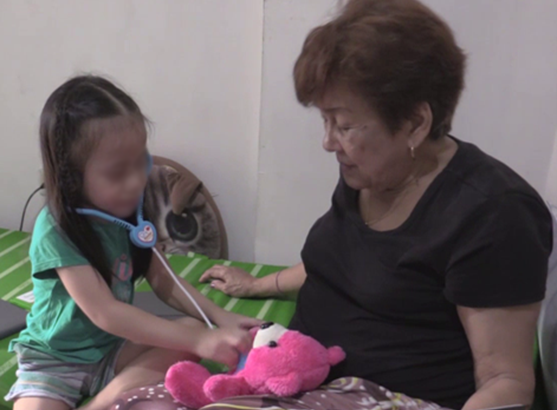
One truism of acquisition is that children are socialized into language and culture (Ochs & Schieffelin, 1984). This means that children are treated differently from competent speakers of the linguistic community because they are still learning its linguistic and cultural conventions. How this notion of difference plays out in universal and culturally specific terms is less clear.
Following the Acquisition Sketch project (Hellwig et al., 2023), we report on an analysis of the language adults use when talking to children (child-directed language or CDL) across five diverse languages and cultures: Murrinhpatha (spoken in rural Northern Australia), Pitjantjatjara (spoken in rural South Australia), Qaqet (spoken in Papua New Guinea), Tagalog (spoken in the Philippines), and Inuktitut (spoken in the Arctic region of Canada). For each language, we used at least five hours of video recordings of spontaneous or semi-structured interactions between children and their caregivers. Their speech productions were transcribed, and for this study, we analyzed the utterances of the adult caregivers. We examined the productions in terms of sound (e.g., whether they use exaggerated pitch), vocabulary (e.g., whether they use nursery forms like “mamam” for water), and form (e.g., whether they use affixes like “in” in “kinain” or just “kain”). We found both striking commonalities and clear differences in CDL across our target languages. The findings support the idea that CDL develops as a set of behaviors influenced by culture, with some behaviors being more common than others.
Furthermore, they underscore the value of the Acquisition Sketch approach in widening the evidence base of the field of child language acquisition. Given that our current knowledge on language acquisition is based mostly on English and other Indo-European languages, limiting theory development and testing, this study was also conducted to broaden language coverage in child language research. With the article’s open access publication, we hope it reaches many researchers, particularly those in underrepresented areas, and that they can build on this work to create acquisition sketches in understudied languages.
Authors: Evan Kidd, Birgit Hellwig, Rowena Garcia, Rebecca Defina, Lucinda Davidson, and Shanley Allen (Australian National University, University of Cologne, Leibniz-Centre General Linguistics & University of thePhilippines Manila, University of Melbourne, University of Melbourne and University of Kaiserslautern-Landau)
Read the full paper: https://doi.org/10.1080/07268602.2025.2514825
Image by Kidd et al.