
Farmers are willing to stop straw burning if given financial incentives
12 Jan 2026
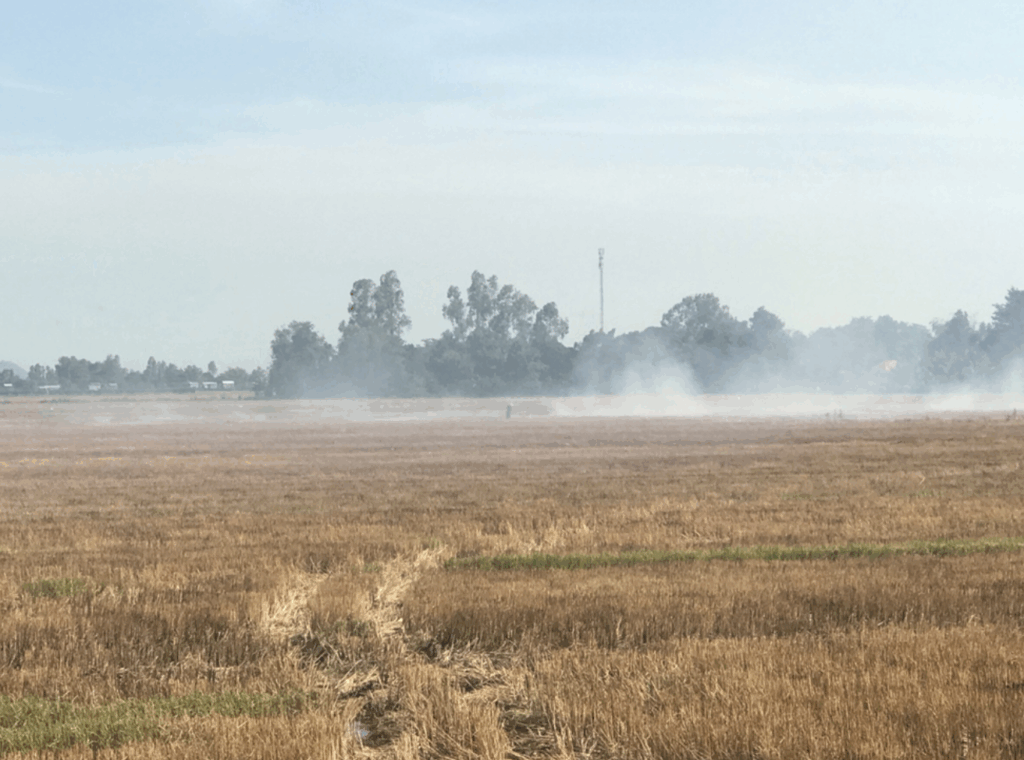
Producing rice generates straw, which is often conveniently burned, causing substantial atmospheric pollution. Increasing straw utilization efficiency and reducing straw burning will improve the agricultural ecological environment and promote the sustainable development of agricultural production.
But little is known about farmers’ perceived costs of alternative straw management practices and what it would take for them to stop straw burning. To address this, we conducted choice experiments with 543 Vietnamese farmers in the Mekong Delta to elicit their preferences for improved straw management practices under varying monetary incentives and enabling environments in mechanization and governance. The attributes and levels used in this study include sustainable practice (i.e., incorporation of rice straw, partial removal, and complete removal), availability of machinery (i.e., low, medium, and high), governance (i.e., individual farmer, farmer organization, and local government), and monetary incentives (US$43–87/ha).
Results from a mixed logit model suggest that farmers are willing to stop straw burning and adopt sustainable straw management practices in return for monetary incentives. Farmers require lower monetary incentives when machinery services for chopping and collecting rice straw are available and when rice straw management is governed collectively by farmer organizations or the local government.
Policymakers can use these results to prioritize investments and design optimal policies for mitigating air pollution by diverting farmers away from straw burning toward sustainable rice straw management practices. While monetary disincentives for straw burning can be created through taxes and fines, monetary incentives for alternative rice straw management practices can be generated through subsidies and investments in intersectoral upgrading of rice value chains, targeted at the development of markets for straw-based products (Demont et al., 2020). Insights on the minimum monetary incentives that farmers require to stop straw burning can help policymakers in their attempt to mitigate environmental pollution.
Authors:
Ong Quoc Cuong (School of Economics, Can Tho University | International Rice Research Institute, Hanoi), Matty Demont (International Rice Research Institute, Los Baños, Laguna), Isabelita M. Pabuayon (Department of Agricultural and Applied Economics, College of Economics and Management, University of the Philippines Los Baños) and Dinah Pura T. Depositario (Department of Agribusiness Management and Entrepreneurship, College of Economics and Management, University of the Philippines Los Baños)
Read the full paper: https://www.sciencedirect.com/science/article/pii/S2667010024000799?via%3Dihub