
New method enables more reliable skin cancer detection by automatically predicting skin lesion types with greater accuracy
30 Mar 2026
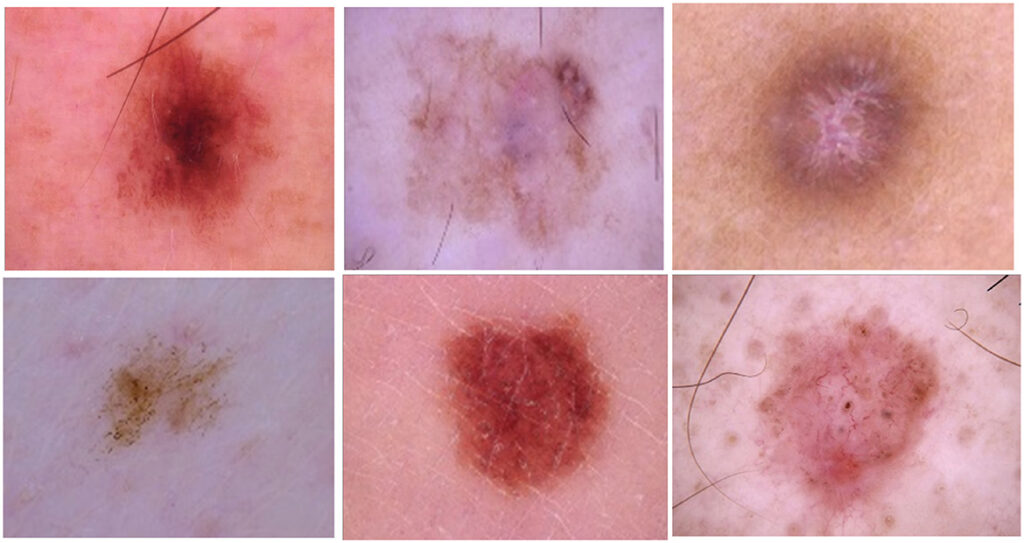
Skin cancer is one of the most common and dangerous cancers globally, but early detection can significantly reduce mortality rates. Dermatologists distinguish between benign and malignant lesions that often look very similar in shape, border, and color, even though both come from melanocyte cells. This makes diagnosis challenging. Typically, doctors use dermatoscopes to examine skin lesions and may perform biopsies to confirm a diagnosis. Expert dermatologists can diagnose melanoma with over 60% accuracy even without specialized visual aids.
Recent advancements in technology have shown that deep learning systems can match dermatologists’ accuracy in identifying skin cancer. However, there is still no universally reliable method for automated diagnosis. This study aims to develop a novel deep-learning approach for automatically predicting the type of skin lesion, providing doctors with a supportive tool for evaluating lesion images. The proposed model also incorporates patient characteristics—such as lesion anatomical location, age, and gender—to improve prediction accuracy. Recent findings indicate that men are 4% more likely to die from melanoma and 10% more likely to develop the disease than women.
Our research focuses on enhancing skin cancer detection by developing advanced Convolutional Neural Network (CNN) models and hybrid machine learning techniques. We tested four different CNN variations and combined them with methods like Support Vector Machines, Random Forest, and Logistic Regression. Our models achieved high accuracy rates of up to 99% when analyzing over 10,000 images from the HAM10000 dataset. We also used techniques to balance and normalize the data, making the models more effective. Importantly, our findings suggest that incorporating patient information with lesion images can further improve diagnostic accuracy. This work is pivotal in advancing automated
tools for diagnosing skin cancer, making early detection more reliable, and potentially saving lives through timely medical treatment and intervention.
Authors: Hadeel Alharbi (College of Computer Science and Engineering, University of Hail), Gabriel Avelino Sampedro (Department of Computer Science, University of the Philippines Diliman), Roben A. Juanatas (College of Computing and Information Technologies, National University, Manila) and Se-jug Lim (School of Electrical and Computer Engineering, Yeosu Campus, Chonnam National University)
Read the full paper: https://doi.org/10.3389/fmed.2024.1495576