
Paclobutrazol significantly enhances flower production in cacao
23 Nov 2026
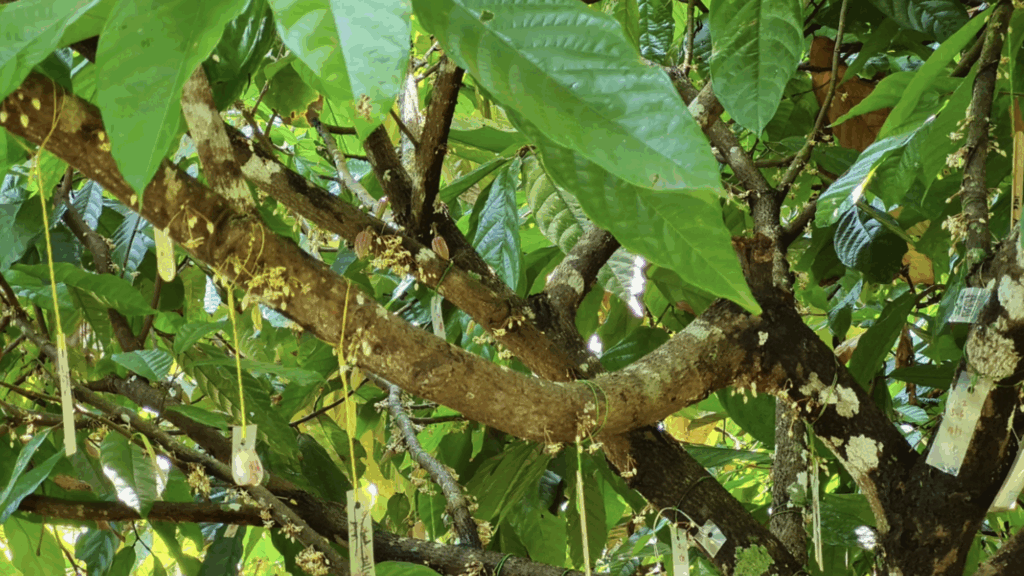
Understanding source-sink relationships in cacao is critical for mitigating cherelle wilt and optimizing flowering and pod retention to enhance bean yield. Application of the gibberellin-biosynthesis inhibitor paclobutrazol (PBZ) increased starch accumulation in sink tissues and leaf SPAD values, thereby improving cherelle development, flowering intensity, and pod retention.
In cacao varieties UF667 and UF18, PBZ increased the number of flowers and flower cushions and improved dried-bean yield by 1.67 kg per tree per year, despite a low flower-to-pod conversion rate. The study also noted that increased cherelle and pod formation led to higher competition for photoassimilates, contributing to cherelle wilt. Fungal infections during peak fruiting, especially in the rainy season, further constrained pod development. These findings highlight the importance of integrating PBZ application with sound cultural practices such as pruning and pest management to optimize yield.
Cherelle wilting remains a significant limitation in cacao production, primarily due to competition for assimilates and inefficient carbohydrate distribution during cherelle development. Gaining deeper insights into carbohydrate metabolism in cacao can enhance our understanding of its physiological processes and help guide strategies to improve yield.
In this study, paclobutrazol effectively promoted flower production in cacao. However, to support the sustained growth of developing cherelles and improve pod retention, it is essential to integrate proper cultural management practices such as strategic pruning and pest control measures alongside
PBZ application. Overall, the results provide a valuable foundation for future research into cacao physiology and yield improvement strategies, emphasizing the need for a holistic approach to managing reproductive growth and environmental stresses in cacao cultivation.
Authors: Mylene C. Nieves, Calixto M. Protacio, Ma. Lourdes S. Edaño, Eureka Teresa M. Ocampo, Antonio C. Laurena (Institute of Crop Science, College of Agriculture and Food Science, University of the Philippines Los Baños)
Read the full paper: https://www.cabidigitallibrary.org/doi/full/10.5555/20250059038
Image by Nieves, et al.