Research

As the national university, we champion and support innovative research that addresses the country’s most pressing challenges.

19 Jul 2023

UP Diliman

Surface constraint approach optimizes the design and trajectory of solar sails that are constrained to move on surfaces

Solar sailing is a propulsion technology that uses the solar radiation pressure of the sun as a source for thrust....

Read More

18 Jul 2023

UP Diliman

Studies on disasters can only be inclusive if scholars and practitioners “decolonize” themselves

The discussions on the decolonization of knowledge in disasters are not entirely new and have been the subject of inquiries...

Read More

14 Jul 2023

UP Diliman

“Filipinized” system that aims to make online learning accessible to nursing students and teachers presented at international conference

The project “Development of a Filipinized Learning Management System” (FLMS), funded by the Emerging Interdisciplinary Research Program of the the...

Read More

10 Jul 2023

UP Los Baños

Transgender poet reflects on what it means to live under the new presidency

Now is no longer the time for poets is a suite of three poems with the following titles: “To write
another...

Read More

07 Jul 2023

UP Manila

Pilgrimage can help ease symptoms of depression and anxiety

Research by psychologists and other mental health professionals tries to identify effective ways to manage and prevent emotional turbulence, including...

Read More

07 Jul 2023

UP Visayas

A study of Chavacano shows how linguistic prestige evolves with changes in society

Chavacano is the lone Spanish-based creole in Asia and is spoken in different parts of the Philippine archipelago. Among the...

Read More

07 Jul 2023

UP Los Baños

The sentiments of political actors on social media are “carefully manufactured” and affect our sense of nationalism

The sentiments peddled by political actors on social media are not coincidental. Rather, they are carefully manufactured texts that convey...

Read More

07 Jul 2023

UP Los Baños

How do Filipino writers represent the experiences of young non-Western readers of science fiction?

Despite the popularity of young adult literature and speculative fiction locally and globally, there is not a lot of critical...

Read More

07 Jul 2023

UP Diliman

What is the optimal position of trees that maximizes walking on urban sidewalks?

Trees can improve the walkability of urban outdoor spaces. Hence, studies have been conducted to examine and elucidate the relationship...

Read More

07 Jul 2023

UP Diliman

Calle Crisologo in Vigan is a lived space and Thirdspace for the people who engage with it every day

Christoph Brumann and David Berliner, in their book World Heritage on the Ground: Ethnographic
Perspectives (2016), ask what World Heritage (WH)...

Read More

07 Jul 2023

UP Diliman

The propagandists struggled with homesickness while in exile

Traditional historiographies such as historian John Schumacher’s seminal work on the Propaganda Movement have portrayed the propagandists as larger-than-life individuals...

Read More

10 May 2023

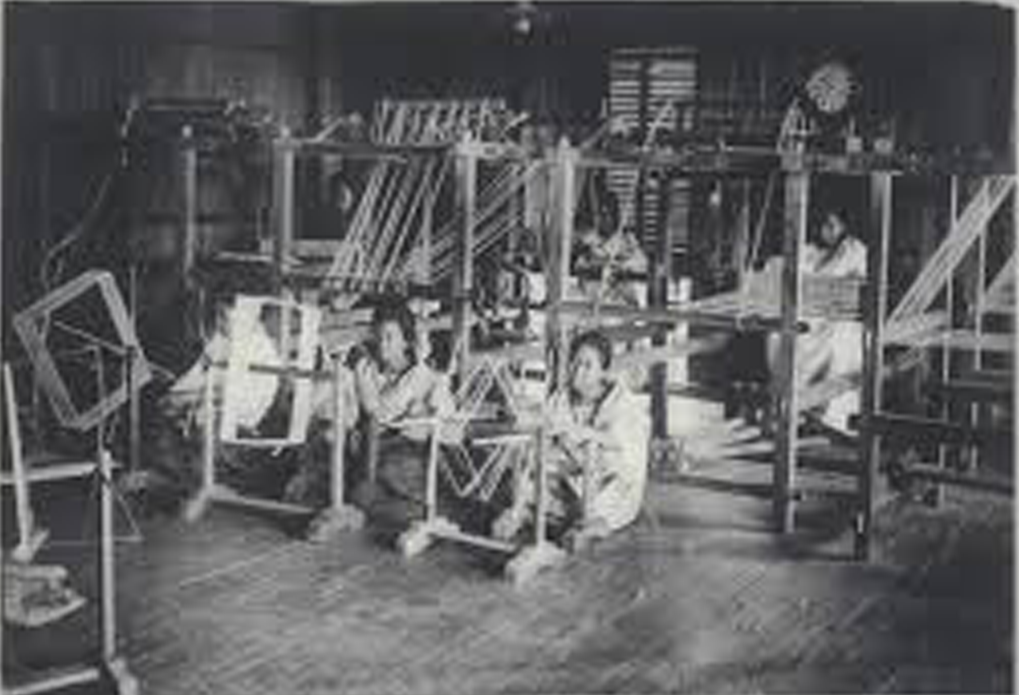
The Provincial Chinese and the Progress of Iloilo Textile in Nineteenth-Century Philippines

Textiles played a significant role in Philippine economic history. In this study, archival materials and records have shown that the...

Read More

Research

In the Philippines, there have been rising incidences of harassment directed at Filipinos who identify as lesbian, gay, bisexual, trans, queer, and intersex (LGBTQI+). These experiences of harassment and violence are reflections of prejudice and discrimination based on an individual’s sexual orientation, gender identity, and gender expression (SOGIE) that have been ingrained and cultivated in social systems, such as the family, education, health, and the law. Because the Philippines does not have a national anti-discrimination legislation that explicitly protects against SOGIE-based discrimination, the burden to address SOGIE-based harassment is left upon the LGBTQI+ community and their allies. This study sought to understand and explore the reasons why Filipinos would or would not intervene in incidences of SOGIE-based harassment. Analyzing five interviews with Filipino university students who had previously witnessed SOGIE-based harassment surfaced two important findings about bystander intervention. First, bystanders consider the contexts and implications of intervening in SOGIE-based harassment, such as the nature of the harassment, the threats to bystander safety, and the victim’s obvious need for help. Second, although bystanders expressed hesitations in intervening because they were considered outsiders in the victim perpetrator interaction, acknowledging the bystander’s shared identity (kapwa) with targets of harassment facilitated intervening. That is, because SOGIE-based harassment is considered inhumane by bystanders, intervening, then, is an act of acknowledging and protecting the humanity of targets of harassment.

Significance

This study describes the behavioral responses of Filipinos to harassment based on an individual’s sexual orientation, gender identity, and gender expression (SOGIE) and explores salient interpersonal and socio- cultural contexts that inform when, how, and why Filipino bystanders intervene in incidences of SOGIE-based harassment. The findings of the study emphasize the importance of kapwa—or shared sense of identity with others—in bystander intervention as Filipinos are more likely to intervene when they associate with targets of SOGIE-based harassment (i.e., acknowledging them as friends or as fellow human beings).

Taking these socio-cultural norms and values into account, the study draws attention to the importance of institutional mechanisms that not only empower bystander intervention but prevent incidences of SOGIE- based harassment in the first place. In universities, these may look like integrating social justice-oriented courses in the curriculum, establishing gender-sensitive programs, and enforcing anti-discrimination policies across the university. Across social institutions, similar initiatives may be implemented, ensuring that these programs center kapwa—or underscoring the inhumanity of SOGIE-based harassment and further emphasizing the humanity of the victims of SOGIE-based harassment.

Author: Luis Emmanuel A. Abesamis (Department of Behavioral Sciences, University of the Philippines Manila)

Read the full paper: https://doi.org/10.1080/19419899.2023.2241863