
Research

As the national university, we champion and support innovative research that addresses the country’s most pressing challenges.

07 Jul 2023

UP Visayas

A study of Chavacano shows how linguistic prestige evolves with changes in society

Chavacano is the lone Spanish-based creole in Asia and is spoken in different parts of the Philippine archipelago. Among the...

Read More

07 Jul 2023

UP Los Baños

The sentiments of political actors on social media are “carefully manufactured” and affect our sense of nationalism

The sentiments peddled by political actors on social media are not coincidental. Rather, they are carefully manufactured texts that convey...

Read More
07 Jul 2023

UP Los Baños

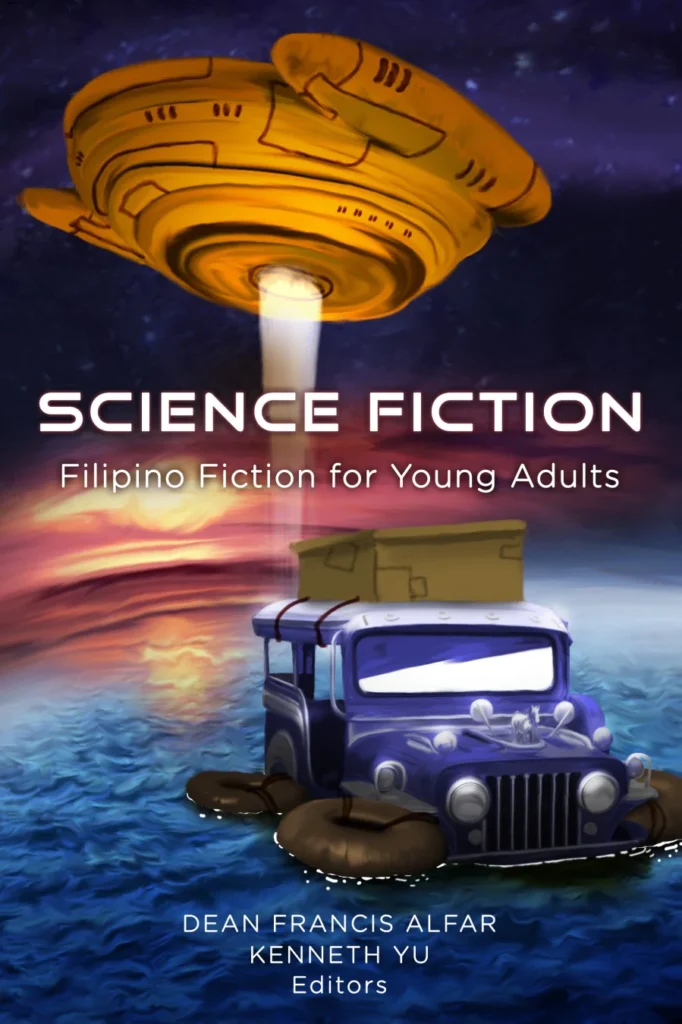
How do Filipino writers represent the experiences of young non-Western readers of science fiction?

Despite the popularity of young adult literature and speculative fiction locally and globally, there is not a lot of critical...

Read More
07 Jul 2023

UP Diliman

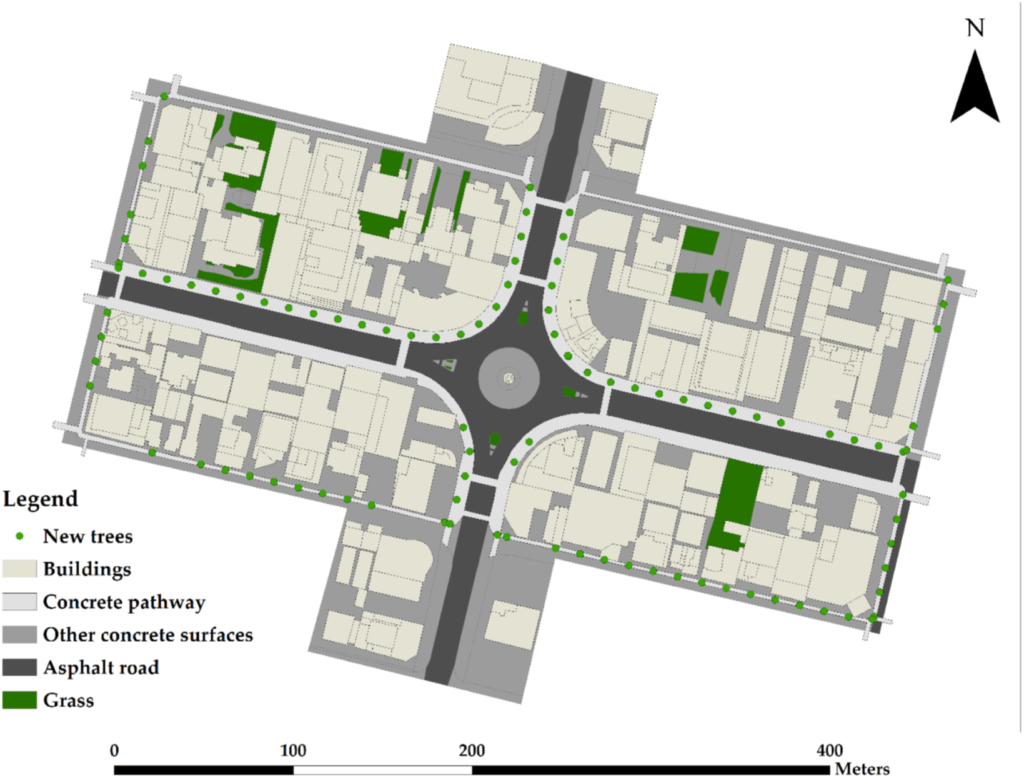
What is the optimal position of trees that maximizes walking on urban sidewalks?

Trees can improve the walkability of urban outdoor spaces. Hence, studies have been conducted to examine and elucidate the relationship...

Read More

07 Jul 2023

UP Diliman

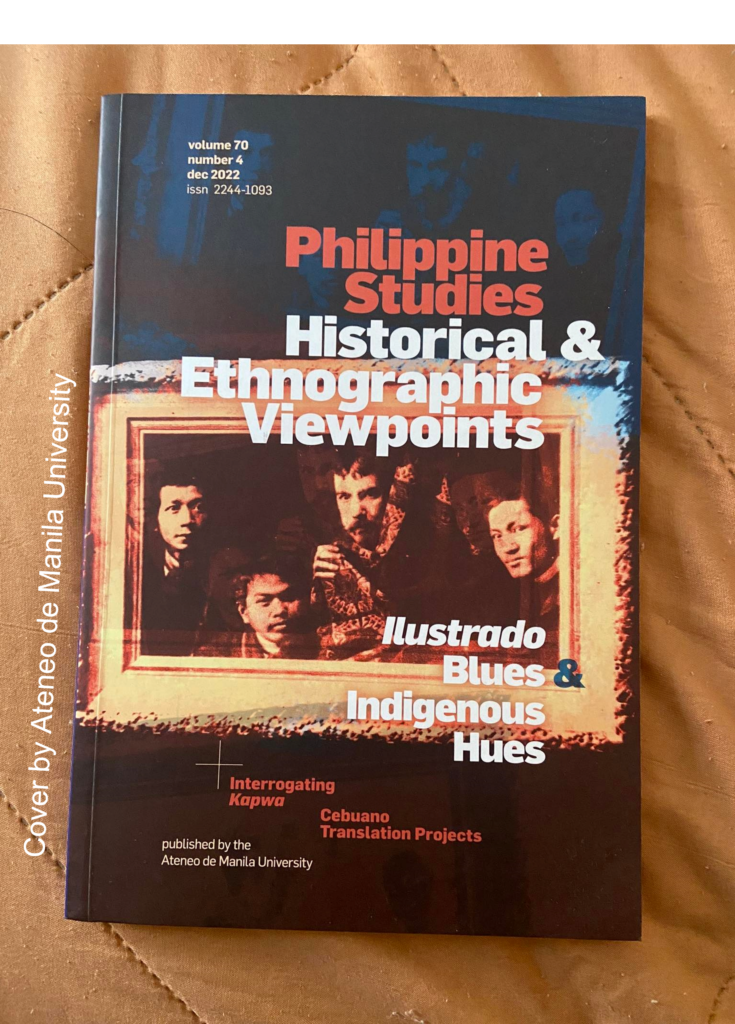
Calle Crisologo in Vigan is a lived space and Thirdspace for the people who engage with it every day

Christoph Brumann and David Berliner, in their book World Heritage on the Ground: Ethnographic
Perspectives (2016), ask what World Heritage (WH)...
Read More

07 Jul 2023

UP Diliman

The propagandists struggled with homesickness while in exile

Traditional historiographies such as historian John Schumacher’s seminal work on the Propaganda Movement have portrayed the propagandists as larger-than-life individuals...

Read More

10 May 2023

The Provincial Chinese and the Progress of Iloilo Textile in Nineteenth-Century Philippines

Textiles played a significant role in Philippine economic history. In this study, archival materials and records have shown that the...

Read More

10 May 2023

Feeling like a philosopher of education: A collective response to Jackson’s ‘The smiling philosopher’

The article “Feeling like a philosopher of education: A collective response to Jackson’s ‘The smiling philosopher” (2022) aimed at responding...

Read More

10 May 2023

Protective effects of sugarcane phenolic extract against lipid oxidative damages in raw ground pork and beef during refrigerated storage conditions

Sugarcane phenolic extract is a by-product of the sugar refining process that is rich in phenolic compounds
with strong antioxidant properties....

Read More

Research

In this study, we investigate how life can spread from one planet to another in a simplified universe where planets are effectively evenly spread out. We use a framework called Percolation Theory, which is often used in modelling phenomena such as the spread of diseases, forest fires, and magnetization, to see how the number of occupied planets behaves with time and how long it takes to occupy all planets in a spherical section of the universe. To this end, we investigate three different types of universes described by their expansion rate in accord with Einstein’s General Theory of Relativity. Surprisingly, for all these types, we find the behavior of occupied planets with respect to time to follow the Logistic Growth Function, a curve widely used in modeling population growth; that is, even if the space itself expands. For a dark energy-dominated universe, the rapid expansion of space makes it impossible to occupy all planets in the spherical section because they can recede from each other at a rate beyond the speed of light. However, for a matter-dominated universe, given enough time, we find it possible to occupy all planets due to a ‘tamed’ expansion of space. The time it takes to occupy all planets in a spherical section of this universe depends on the Hubble parameter, H, describing the rate of expansion. The behavior of this time is characterized by a linear
relationship for small values of H and a quadratic relationship for large values of H.

The study is partly driven by the usual human desire to understand the cosmos, its colonization, and alien life. The universe is about 14 billion years old and contains hundreds of billions of galaxies if not in the trillions. Our very own Milky Way galaxy alone contains about a hundred billion stars. Yet, with reference to the Fermi paradox, we seem to be alone. By studying the intricate dynamics of our universe, specifically how the number of colonized planets change over time, our study offers an interesting perspective about our colonization potential. It also gives us an insight about the current phase in the spread of colonization in the universe by advanced civilizations. With its vastness, the universe may still be young and advanced civilizations may still be in the earliest phase of propagation; the colonies of advanced civilizations may be existing but not yet interconnected. Or, we are in the phase of fast colonization, yet our alien friends allow us to grow and develop on our own until we have the requisite science and technology to reach them.

Authors: Allan L. Alinea and Cedrix Jake Jadrin (Institute of Mathematical Sciences and Physics, College of Arts and Sciences, University of the Philippines Los Baños)

Read the full paper: https://doi.org/10.1088/1361-6404/acfbc5