
Tensions and disagreements within indigenous communities over representation and creative innovation influence indigenous traditional practices
16 Apr 2026
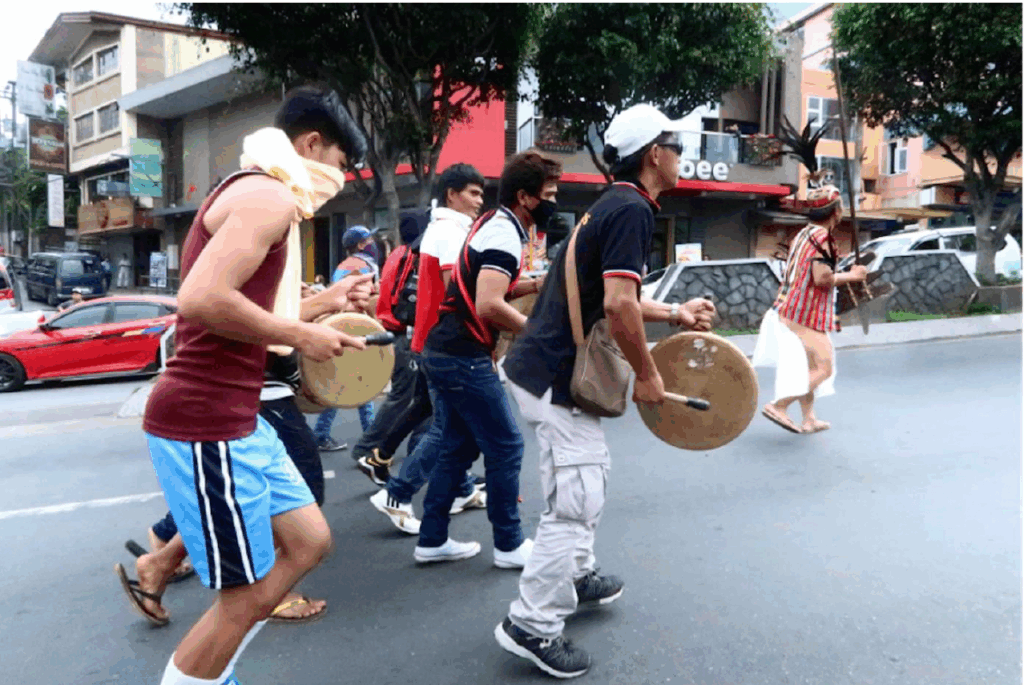
Street protests led by Igorot left-wing activists feature sharp rhythms of gangsa (flat gongs), political speeches over loudspeakers, and chants that go back and forth with the crowd, mixed with traditional celebratory dances. For many, these protests express important Igorot values such as collectivism, sovereignty, and territorial defense—continuing a long history of resisting corporate intrusion since the 1970s. However, not all Igorots agree with this approach. In 2017, some performances by leftist Igorots sparked debates within the community concerning linking Igorot identity with political activism. This was especially difficult for one elder who had, since his youth, seen Igorots defend their ancestral lands from corporate intrusion using traditional practices. Struggling with this tension, he chose to step away from the “noise” of protests, staging a solo act that reaffirmed his identity as an Igorot activist, but also sought acceptance from the wider Igorot community.
Using perspectives from sound studies, affect theory, and Indigenous studies, this paper examines how indigenous traditional practices develop through tensions and disagreements over representation and creative innovation among members of indigenous communities, drawing on the history and practices of left-wing activism in the Cordillera Region of the northern Philippines. In particular, it examines how an elderly member of an indigenous Igorot community, who is also an activist and a member of a political organization, responded to members of his community who criticized his use of traditional practices, costuming, music, and dance in street protests. His response, which involves a solo performance that symbolically reaffirms his political convictions, demonstrates how indigenous practice can evolve through an individual’s agency.
My research seeks to intervene in static and essentialist representations of Indigenous people and to complicate the ideologies and practices of political movements, while showing the strong ties between Indigenous knowledge and the struggle for land. In addition, it offers music as evidence for how Indigenous persons express their complex and evolving identities, thereby attesting to the importance of attending to musical expression and what it says about the dynamism of indigeneity.
Author: Lisa Decenteceo (Department of Musicology, College of Music, University of the Philippines Diliman)
Read the full paper: https://ejournal.upsi.edu.my/index.php/MJM/issue/view/587