Trigonometry is easier to grasp when adapted to students’ learning styles
07 Sep 2026
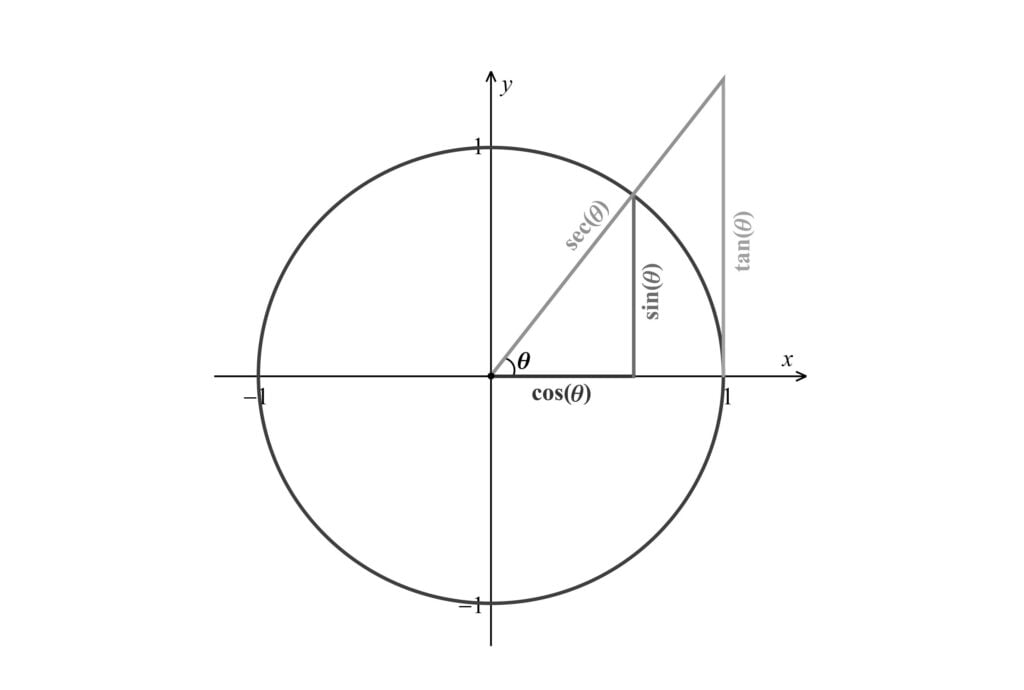
Trigonometry often frustrates students because its abstract concepts don’t always connect with how they naturally think. This research set out to understand why—by studying how Grade 10 students actually approach trigonometry problems. What we found was eye-opening: students don’t all learn the same way. Some follow strict step-by-step methods, others spot patterns, some use real-world comparisons, and many combine these approaches.
The big discovery? Teaching works best when it matches students’ natural thinking styles. For example, hands-on learners grasp concepts faster when measuring actual objects, while visual learners benefit from comparing triangles to everyday objects like ramps or roofs. Classroom discussions where students explain their reasoning also prove powerful—they help identify misunderstandings while building problem-solving confidence.
These findings matter far beyond trigonometry classrooms. When we teach flexibly, students don’t just memorize formulas; they truly understand concepts. This levels the playing field for different types of thinkers and prepares all students better for STEM careers. The research suggests that similar approaches could improve how we teach other challenging subjects, from physics to computer science. Ultimately, this isn’t just about better grades; it’s about making education work for how real students learn. By recognizing and supporting diverse thinking styles, we can reduce math anxiety and create more effective, engaging learning experiences for everyone.
This study makes substantial contributions to mathematics education through its innovative examination of how students engage with trigonometric concepts. The research carries both theoretical and practical significance across multiple dimensions:
1. Deepening Understanding of Mathematical Cognition
By systematically categorizing students’ reasoning approaches (deductive, inductive, abductive, analogical, and algorithmic), the study provides a nuanced framework for understanding how learners construct mathematical knowledge. This moves beyond traditional performance-based assessments to reveal:
• Cognitive Diversity: Documenting why some students thrive with algorithmic methods while others rely on analogical thinking helps explain disparities in learning outcomes.
• Conceptual Roadblocks: Identifying where each reasoning style succeeds or fails (e.g., inductive reasoning may lead to overgeneralization in trigonometry) pinpoints specific challenges in curriculum design.
2. Transforming Instructional Practices
The study shifts the focus from what students learn to how they learn, offering evidence-based strategies to refine pedagogy:
• Targeted Scaffolding: Teachers can now tailor support—for example, using analogies for students struggling with abstraction or guided proofs for those overly reliant on algorithms.
• Metacognitive Development: Emphasizing reflection and justification cultivates deeper learning, helping students recognize and correct flawed reasoning independently.
• Collaborative Learning: Findings validate discourse-rich classrooms where students articulate and debate reasoning, strengthening both conceptual understanding and communication skills.
3. Addressing Equity in STEM Education
The work challenges the assumption that all students must conform to a single “correct” reasoning process.
Instead, it advocates for:
• Inclusive Pedagogy: By valuing diverse approaches (e.g., visual/spatial thinkers using analogies versus step-by-step algorithmic learners), classrooms become more accessible.
• Reducing Anxiety: Students gain confidence when their natural reasoning is validated before transitioning to formal methods, particularly benefiting underrepresented groups often marginalized by rigid instruction.
4. Implications Beyond Trigonometry
The framework extends to other STEM domains where abstract concepts pose barriers:
• Physics and Engineering: Applications of trigonometric reasoning (e.g., wave functions, vectors) could adopt similar strategies to bridge concrete and abstract thinking.
• Computer Science: Algorithmic reasoning parallels coding logic, while abductive reasoning mirrors debugging processes.
5. Policy and Curriculum Development
The study provides empirical grounding for:
• Teacher Training Programs: Highlighting the need to equip educators with tools to diagnose and nurture diverse reasoning styles.
• Standards Revisions: Advocating for curricula that balance procedural fluency with adaptive reasoning, aligning with global shifts (e.g., PISA’s focus on creative problem-solving).
6. Real-World Relevance
By linking classroom practices to real-world problem-solving, the research prepares students for:
• Technical Careers: Engineers, data scientists, and architects require both rigorous reasoning and flexibility—skills honed through the study’s approaches.
• Lifelong Learning: Emphasizing process over rote memorization fosters adaptability in an era of rapid technological change.
This work redefines excellence in mathematics education by prioritizing how students think over what they reproduce. It equips educators to nurture versatile, confident problem-solvers—an imperative for 21st-century STEM fields. The full paper offers detailed methodologies and case studies to implement these insights.
Author: Allan M. Canonigo (National Institute for Science and Mathematics Education Development, University of the Philippines Diliman)
Read the full paper: https://s3.amazonaws.com/files.commons.gc.cuny.edu/wp- content/blogs.dir/34462/files/2025/07/06_Canonigo_120_153.pdf
Image by Nothing Ahead from Pexels