
To preserve the Ifugao Rice Terraces, it is essential to integrate traditional knowledge with modern techniques

26 Dec 2025
UP Los Baños

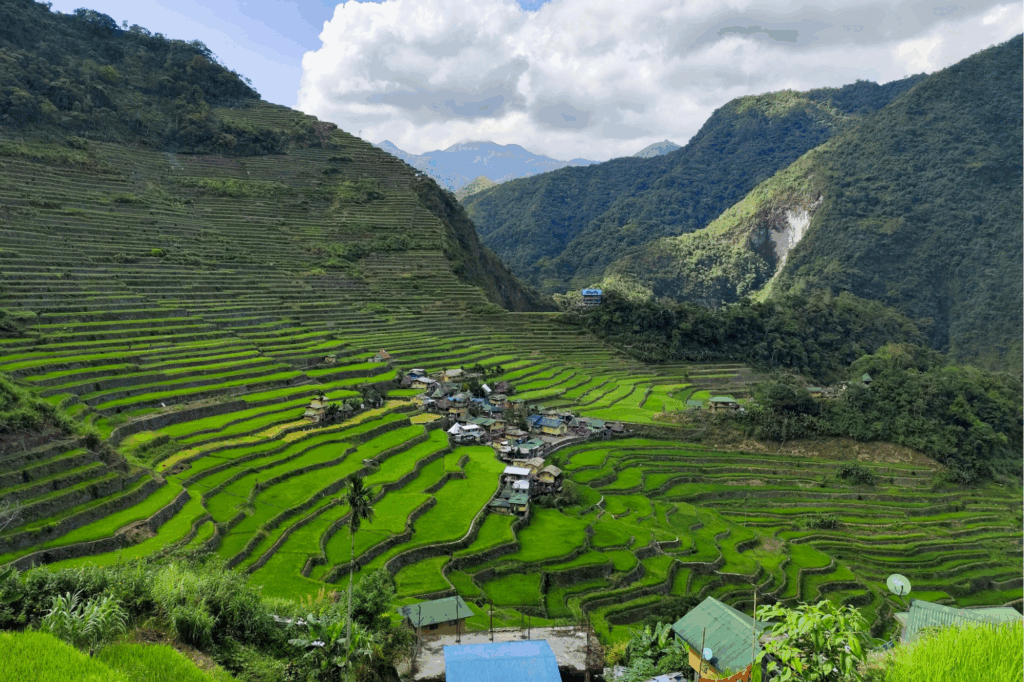
The Ifugao Rice Terraces in the Philippines, a UNESCO World Heritage Site, are a living testament to centuries of indigenous agricultural knowledge. However, these historic terraces are facing challenges due to climate change, modern farming practices, and socio-economic pressures. This research explores how farmers in Ifugao can continue practicing Environmental Conservation Agriculture (ECA)—a sustainable farming approach that integrates traditional techniques with modern innovations—to ensure the long-term survival of the terraces.

The study finds that while modern high-yield crops and farming equipment improve productivity, they also threaten the traditional Tinawon rice, a unique heirloom variety crucial for biodiversity and cultural identity. Additionally, climate change, including more frequent droughts and soil erosion, is making it harder for farmers to maintain their land. Despite these challenges, many farmers remain committed to sustainable agriculture by using organic fertilizers, crop rotation, and indigenous pest management techniques. These sustainable practices also mitigate climate-related risks.

By highlighting the need for financial support, better irrigation systems, and stronger community networks, this research provides practical recommendations for preserving the terraces while ensuring that local farmers thrive. The study also acknowledges the influence of indigenous cultural values and rituals on farming decisions, emphasizing the necessity of integrating traditional knowledge with modern agricultural advancements. It emphasizes the importance of balancing innovation with tradition to protect both the environment and cultural heritage.

This study is valuable for policymakers, conservationists, and local communities working to sustain the Ifugao Rice Terraces and promote long-term environmental and economic sustainability. It provides valuable insights into how government initiatives can support sustainable farming while preserving cultural traditions. By advocating for community-driven and participatory interventions, the study presents strategies to enhance the adoption of ECA and strengthen climate resilience among Ifugao farmers. Moreover, it highlights the potential of ECA to improve farmers’ livelihoods by increasing income opportunities, ensuring food security, and fostering eco-tourism and local industries.

Authors: Keshav Lall Maharjan (Hiroshima University, Japan), Clarisse Mendoza Gonzalvo (College of Development Communication, University of the Philippines Los Baños | Globally Important Agricultural Heritage Systems (GIAHS) Center, Ifugao State University), and Jude Cadingpal Baggo (Globally Important Agricultural Heritage Systems (GIAHS) Center, Ifugao State University)

Read the full paper: https://doi.org/10.1063/5.0230585

To preserve the Ifugao Rice Terraces, it is essential to integrate traditional knowledge with modern techniques

The Ifugao Rice Terraces in the Philippines, a UNESCO World Heritage Site, are a living testament to centuries of indigenous agricultural knowledge. However, these historic terraces are facing challenges due to climate change, modern farming practices, and socio-economic pressures. This research explores how farmers in Ifugao can continue practicing Environmental Conservation Agriculture (ECA)—a sustainable farming approach that integrates traditional techniques with modern innovations—to ensure the long-term survival of the terraces.

The study finds that while modern high-yield crops and farming equipment improve productivity, they also threaten the traditional Tinawon rice, a unique heirloom variety crucial for biodiversity and cultural identity. Additionally, climate change, including more frequent droughts and soil erosion, is making it harder for farmers to maintain their land. Despite these challenges, many farmers remain committed to sustainable agriculture by using organic fertilizers, crop rotation, and indigenous pest management techniques. These sustainable practices also mitigate climate-related risks.

By highlighting the need for financial support, better irrigation systems, and stronger community networks, this research provides practical recommendations for preserving the terraces while ensuring that local farmers thrive. The study also acknowledges the influence of indigenous cultural values and rituals on farming decisions, emphasizing the necessity of integrating traditional knowledge with modern agricultural advancements. It emphasizes the importance of balancing innovation with tradition to protect both the environment and cultural heritage.

This study is valuable for policymakers, conservationists, and local communities working to sustain the Ifugao Rice Terraces and promote long-term environmental and economic sustainability. It provides valuable insights into how government initiatives can support sustainable farming while preserving cultural traditions. By advocating for community-driven and participatory interventions, the study presents strategies to enhance the adoption of ECA and strengthen climate resilience among Ifugao farmers. Moreover, it highlights the potential of ECA to improve farmers’ livelihoods by increasing income opportunities, ensuring food security, and fostering eco-tourism and local industries.

Authors: Keshav Lall Maharjan (Hiroshima University, Japan), Clarisse Mendoza Gonzalvo (College of Development Communication, University of the Philippines Los Baños | Globally Important Agricultural Heritage Systems (GIAHS) Center, Ifugao State University), and Jude Cadingpal Baggo (Globally Important Agricultural Heritage Systems (GIAHS) Center, Ifugao State University)

Read the full paper: https://doi.org/10.1063/5.0230585