
In Bicol, poverty levels vary from one area to another

29 May 2026
The Philippines is a developing country with many regions suffering from poverty. In Luzon, the poorest region is Bicol, with most of its provinces being impoverished.

Poverty is a tough problem that has been around for a long time. It is hard to fix because it involves many factors, making it difficult to measure. To effectively tackle poverty, especially in rural areas, we need to break it down into different parts. Many studies on poverty are not very detailed and can make mistakes because they look at a large number of people at once, leading to underrepresentation, often used for making significant economic decisions. That is why it is crucial to focus on studying poverty in specific places with different characteristics to help these areas grow economically.

In our research paper, we used various methods like predictive analytics and econometrics to delve deeply into poverty, examining small factors using a local monitoring system. We created models using mathematical techniques like Logistic Regression to understand how different factors affect poverty levels. Additionally, we used various measures to determine the severity of poverty in different locations.

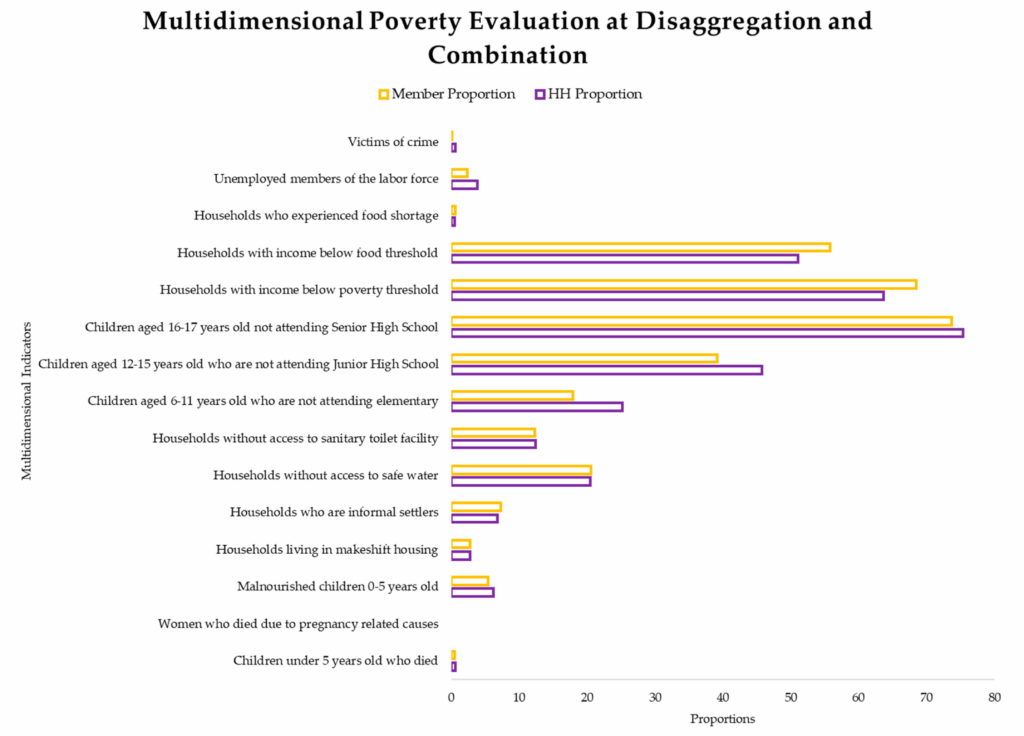
Our findings revealed that poverty levels vary from one area to another. In places like Isarog, many individuals and families are struggling to access adequate food. Poverty ranges from severe in areas like Salog to moderate in others, highlighting the diverse nature of poverty across different regions. We also identified specific factors that can predict the extent of poverty in an area, with intermediary variables playing a significant role in influencing poverty levels in various communities.

This study underscores the complexity of poverty and the need for diverse strategies to address it effectively. The high predictive power of our models underscores the reliability and accuracy of our analysis in forecasting poverty outcomes. By focusing on decomposing rural multidimensional poverty, we address a critical aspect often overlooked in generic studies, providing a deeper understanding of poverty complexities in specific localities. We also put forth specific recommendations to help alleviate poverty and enhance economic development in these areas.

Authors: Emmanuel Azcarraga Onsay (Graduate School, University of the Philippines Los Baños | Partido Institute of Economics, Partido State University, Goa, Philippines) and Jomar Fajardo Rabajante (Graduate School, University of the Philippines Los Baños)

Read the full paper: https://www.mdpi.com/2075-4698/14/11/235

In Bicol, poverty levels vary from one area to another

The Philippines is a developing country with many regions suffering from poverty. In Luzon, the poorest region is Bicol, with most of its provinces being impoverished.

Poverty is a tough problem that has been around for a long time. It is hard to fix because it involves many factors, making it difficult to measure. To effectively tackle poverty, especially in rural areas, we need to break it down into different parts. Many studies on poverty are not very detailed and can make mistakes because they look at a large number of people at once, leading to underrepresentation, often used for making significant economic decisions. That is why it is crucial to focus on studying poverty in specific places with different characteristics to help these areas grow economically.

In our research paper, we used various methods like predictive analytics and econometrics to delve deeply into poverty, examining small factors using a local monitoring system. We created models using mathematical techniques like Logistic Regression to understand how different factors affect poverty levels. Additionally, we used various measures to determine the severity of poverty in different locations.

Our findings revealed that poverty levels vary from one area to another. In places like Isarog, many individuals and families are struggling to access adequate food. Poverty ranges from severe in areas like Salog to moderate in others, highlighting the diverse nature of poverty across different regions. We also identified specific factors that can predict the extent of poverty in an area, with intermediary variables playing a significant role in influencing poverty levels in various communities.

This study underscores the complexity of poverty and the need for diverse strategies to address it effectively. The high predictive power of our models underscores the reliability and accuracy of our analysis in forecasting poverty outcomes. By focusing on decomposing rural multidimensional poverty, we address a critical aspect often overlooked in generic studies, providing a deeper understanding of poverty complexities in specific localities. We also put forth specific recommendations to help alleviate poverty and enhance economic development in these areas.

Authors: Emmanuel Azcarraga Onsay (Graduate School, University of the Philippines Los Baños | Partido Institute of Economics, Partido State University, Goa, Philippines) and Jomar Fajardo Rabajante (Graduate School, University of the Philippines Los Baños)

Read the full paper: https://www.mdpi.com/2075-4698/14/11/235