
Using eucalyptus oil to modify a renewable carbon paste electrode creates an effective tool for detecting toxic lead ions

08 Jul 2026
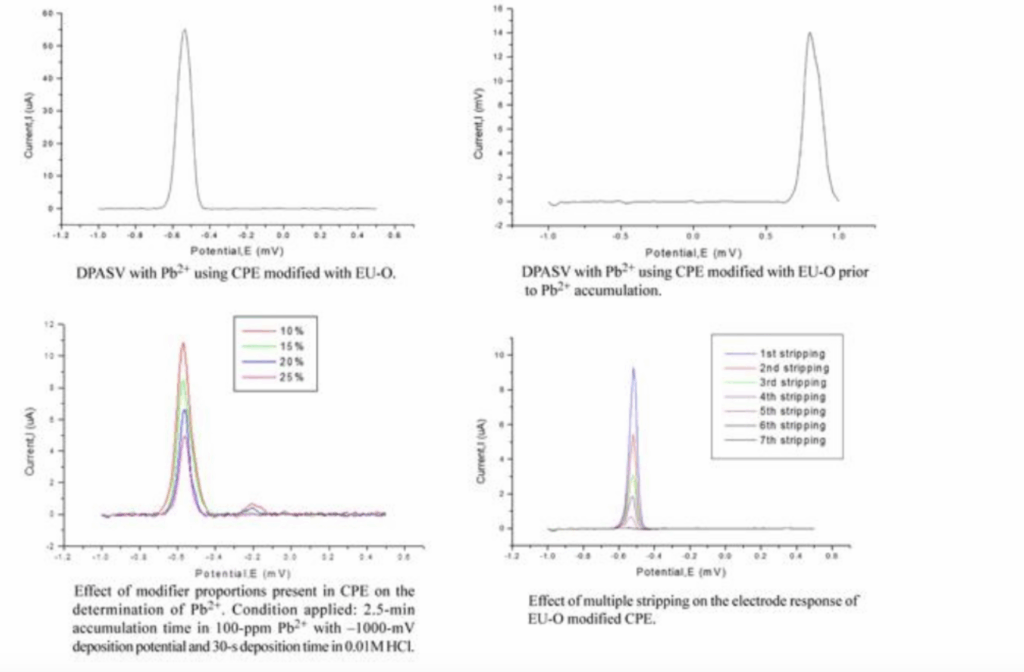
Heavy metals are one of the most serious environmental pollutants and contaminants due to their toxicity. They are nonbiodegradable and has a capacity to accumulate in the human body thru bioaccumulation. They pose a significant risk to human health and to the ecosystems. Hazardous heavy metals are often found in industrial activities. Among them is lead (II) which is mostly present in the environment, particularly in bodies of water, because of its widespread industrial use. Its metal ion, Pb2+, is recognized as a very hazardous and non-biodegradable.

Various analytical techniques have been developed in response to the determination of Pb2+. Most of these analytical methods that are used in the determination of Pb2+ are laborious, need sample preparation, and demand costly equipment and skilled personnel. Electrochemical methods have been developed and are generally acknowledged as an alternative technique for determining heavy metal ions.

Carbon electrodes are among the most used electrodes in this method. A carbon paste electrode modified with eucalyptus’s essential oil was used in this study, and the results have established the ability of the eucalyptus’s essential oil to detect Pb2+.

Researchers also determined the optimal conditions for detecting Pb2+ with the modified carbon paste electrode by analyzing various electrochemical factors, including the proportion of the modifier, composition of the stripping solution, accumulation time, pH, and deposition time and potential. The study also showed that the electrode can be successfully regenerated using a multiple stripping method. While the findings validate the ability of eucalyptus essential oil to detect Pb2+, they show that it is not highly selective toward Pb2+.

Using eucalyptus oil as a modifier is both a sustainable and cost-effective method for the initial detection of Pb2+ ions. Furthermore, the modified carbon paste electrode is renewable, has low background current, low cost, is easy to prepare, and has a large surface area for modification, enhanced sensitivity, and selectivity.

Authors: Mylene Ilagan (Institute of Chemistry, University of the Philippines Los Baños), Kim Wilmer M. Balagot (Institute of Chemistry, University of the Philippines Los Baños | Forest Products Research and Development Institute, Department of Science and Technology, Laguna), Jose Rene L. Micor (Institute of Chemistry, University of the Philippines Los Baños), and Elmer-Rico E. Mojica (Institute of Chemistry, University of the Philippines Los Baños | Department of Chemistry and Physical Sciences, Pace University, New York City)

Read the full paper: https://philjournalsci.dost.gov.ph/essential-oil-of-eucalyptus-as-modifier-of-carbon-paste-electrode-for-voltammetric-determination-of-lead-ions/

Using eucalyptus oil to modify a renewable carbon paste electrode creates an effective tool for detecting toxic lead ions

Heavy metals are one of the most serious environmental pollutants and contaminants due to their toxicity. They are nonbiodegradable and has a capacity to accumulate in the human body thru bioaccumulation. They pose a significant risk to human health and to the ecosystems. Hazardous heavy metals are often found in industrial activities. Among them is lead (II) which is mostly present in the environment, particularly in bodies of water, because of its widespread industrial use. Its metal ion, Pb2+, is recognized as a very hazardous and non-biodegradable.

Various analytical techniques have been developed in response to the determination of Pb2+. Most of these analytical methods that are used in the determination of Pb2+ are laborious, need sample preparation, and demand costly equipment and skilled personnel. Electrochemical methods have been developed and are generally acknowledged as an alternative technique for determining heavy metal ions.

Carbon electrodes are among the most used electrodes in this method. A carbon paste electrode modified with eucalyptus’s essential oil was used in this study, and the results have established the ability of the eucalyptus’s essential oil to detect Pb2+.

Researchers also determined the optimal conditions for detecting Pb2+ with the modified carbon paste electrode by analyzing various electrochemical factors, including the proportion of the modifier, composition of the stripping solution, accumulation time, pH, and deposition time and potential. The study also showed that the electrode can be successfully regenerated using a multiple stripping method. While the findings validate the ability of eucalyptus essential oil to detect Pb2+, they show that it is not highly selective toward Pb2+.

Using eucalyptus oil as a modifier is both a sustainable and cost-effective method for the initial detection of Pb2+ ions. Furthermore, the modified carbon paste electrode is renewable, has low background current, low cost, is easy to prepare, and has a large surface area for modification, enhanced sensitivity, and selectivity.

Authors: Mylene Ilagan (Institute of Chemistry, University of the Philippines Los Baños), Kim Wilmer M. Balagot (Institute of Chemistry, University of the Philippines Los Baños | Forest Products Research and Development Institute, Department of Science and Technology, Laguna), Jose Rene L. Micor (Institute of Chemistry, University of the Philippines Los Baños), and Elmer-Rico E. Mojica (Institute of Chemistry, University of the Philippines Los Baños | Department of Chemistry and Physical Sciences, Pace University, New York City)

Read the full paper: https://philjournalsci.dost.gov.ph/essential-oil-of-eucalyptus-as-modifier-of-carbon-paste-electrode-for-voltammetric-determination-of-lead-ions/