
Common factors affecting the social acceptability of waste-to-energy projects include perceived risks, trust, awareness, and knowledge
03 Jun 2026
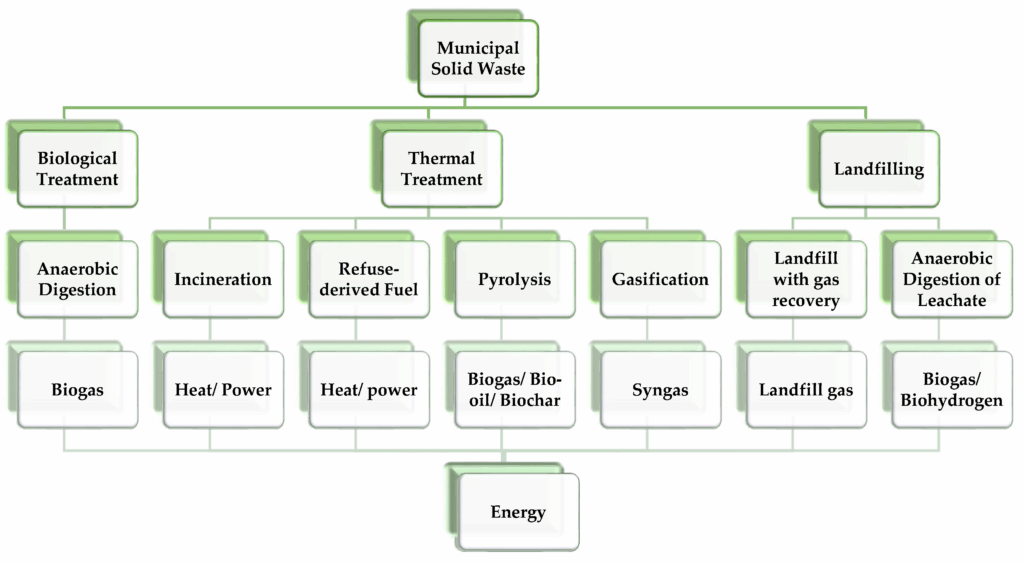
Due to population growth and economic development, the sustainable management of municipal solid waste (MSW) remains a challenging issue for developing and even developed countries. To address this problem, different countries are implementing various strategies and technologies to decrease the environmental footprint of MSW. These include the 3Rs (reduce, reuse, recycle), segregation at source, composting, circular economy (CE), sanitary landfilling, and their combinations. Another promising technology is waste-to-energy (WtE), which complements the previous strategies by closing the loop of a CE. Waste-to-energy (WtE) technologies are clean technologies that support a circular economy by providing solutions to managing non-recyclable waste while generating alternative energy sources.
Waste-to-energy (WtE) helps reduce the need for new landfills, processes nonrecyclable waste, supports recycling and the recovery of valuable materials, and contributes to energy security by converting waste into usable fuel, heat, or electricity. Moreover, energy utilization of MSW makes it possible to simultaneously solve several UN Sustainable Development Goals (SDGs), particularly SDG 6, SDG 7, SDG 11, SDG 12, and SDG 13, by addressing waste management, improving public health, providing clean energy, promoting sustainable urban development, encouraging responsible consumption, and mitigating climate change.
Despite the promising benefits, technology adoption is challenged by financing constraints, technical maturity, environmental impacts, supporting policies, and public acceptance. A growing number of studies have analyzed the acceptability of WtE and identified the factors affecting the adoption of WtE technologies. This study aims to analyze these research hotspots, technologies, and acceptability factors through a combined bibliometric and systematic analysis. An initial search of the Web of Science and Scopus databases identified 817 unique documents, and refinement yielded 109 for data analysis.
The results present a comprehensive overview of the state of the art, providing researchers with a basis for future research directions. Among the WtE technologies in the reviewed literature are incineration, anaerobic digestion, gasification, and pyrolysis, with limited studies about refuse-derived fuel and landfilling with gas recovery. The identified common factors affecting the acceptability of waste-to-energy projects include perceived risks, trust, attitudes, perceived benefits, “Not-In-My-Backyard” (NIMBY), awareness, and knowledge. Moreover, the findings offer valuable insights for policymakers, practitioners, and WtE project planners to support WtE adoption and achieve sustainable, circular, and low-carbon economies.
Authors: Casper Boongaling Agaton and Marween Joshua A. Santos (Department of Community and Environmental Resource Planning, College of Human Ecology, University of the Philippines Los Baños)
Read the full paper: https://doi.org/10.3390/cleantechnol7030063