Clear communication, strong mentorship, and approachable faculty help reduce student stress and enhance engagement
15 Apr 2026
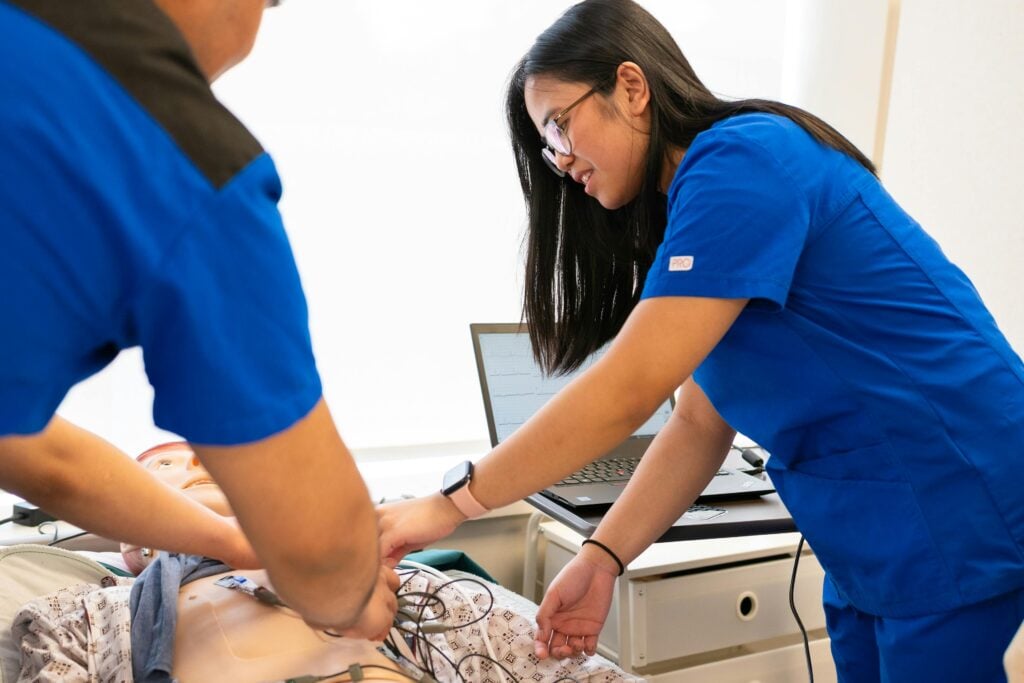
College students in health-related courses, like medicine, nursing, and occupational and physical therapy, often deal with stress, burnout, and mental health struggles. While schools try to help by offering counselling or wellness programs, one important factor is often overlooked: how teachers or faculty interact with their students.
This research reviewed 21 studies to understand what happens when students have positive or negative interactions with the faculty. We systematically mapped how student-faculty interactions are defined, where they occur, how they influence mental health outcomes, and what institutional supports exist. Our study shows that when faculty members are approachable, give helpful feedback, and show genuine care, students feel more supported, less stressed, and more motivated to succeed. Positive interactions, such as clear communication, mentorship, and approachability, are linked to reduced stress and improved engagement. However, when faculty members are unkind, hard to reach, or create too much pressure, students may lose confidence or even burn out. Negative interactions, shown as a lack of support or having rigid hierarchies, contribute to anxiety and academic disengagement.
Our study also showed that not many schools train their faculty to support students emotionally, and there are few tools to assess student-faculty interactions properly. By bringing attention to this issue, our study encourages schools to invest in better teacher training, mentoring programs, and policies that create a more caring and respectful learning environment. These improvements can help health professions students’ mental health, as mental health matters not only for health professionals but also for the people they will care for in the future.
This research is significant because it identifies student-faculty interaction as both a protective and a risk factor for mental health. It reveals gaps in current approaches, including the limited use of validated tools and the lack of structured faculty development programs that address SFI in academic and clinical settings. It also advances scholarship by framing student-faculty interaction not only as an instructional process but as an influence on student mental health. These insights are timely and actionable, especially in fields where students face high-performance demands and complex learning environments.
Authors: Paolo Miguel P. Bulan (College of Allied Medical Professions, University of the Philippines Manila | College of Occupational Therapy and Physical Therapy, Velez College), Maria Concepcion C. Cabatan (College of Allied Medical Professions, University of the Philippines Manila) and Elena Wong Espiritu (College of Allied Medical Professions, University of the Philippines Manila | College of Pharmacy and Health Sciences, Belmont University)
Read the full paper: https://hpe.researchcommons.org/journal/vol11/iss2/14/
Image by Sahil Singh from Pexels